What worries you most about a kit delivery?
No votes yet. Yours will be the first. · saved on this device
Loading...
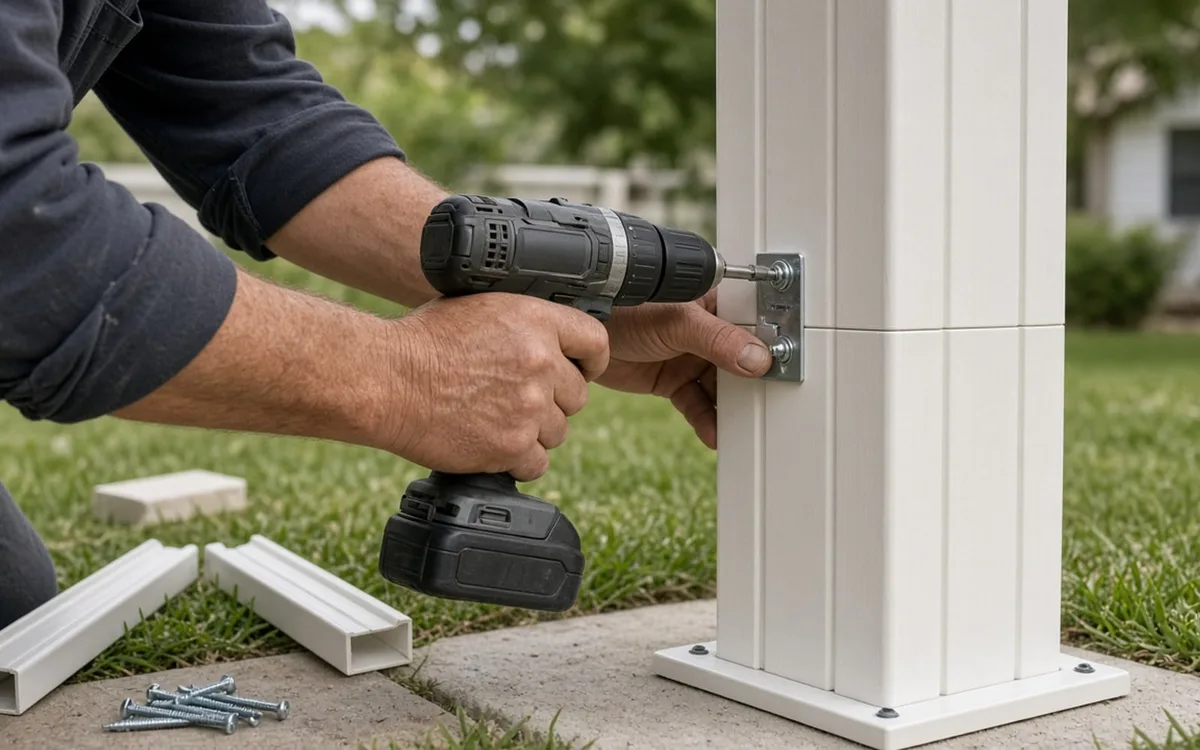
Gazebo Guidebook · Service guide
Gazebo kit assembly is the professional build of a delivered kit on a prepared base: unloading, parts inventory, anchoring, assembly, roofing and cleanup. It suits an owner who has chosen a complete model and can arrange a suitable foundation. Labor typically runs $500 to $1,500 on top of the kit, and the base, anchors and electrical are usually separate.
Kits are how most gazebos arrive now. MarketIntelo's 2025 report finds online stores account for 34.7% of gazebo sales, which means a freight truck, a pallet at the curb and a manual. Wellwhisk reports a 10-by-12 hardtop kit takes 10 to 20 hours to assemble and a heavy Backyard Discovery cedar kit a full weekend with five people; Yardistry's 12-by-14 cedar model ships at about 683 pounds in three boxes.
Professional assembly turns that weekend into a day or two, and more importantly puts someone accountable for the parts inventory, the anchors and the base. This page covers what it costs, what must be ready, and the questions to settle before the truck is booked.
Want the numbers only? Read the gazebo kit assembly cost guide for 2026 ranges, what moves the price, and sample budgets.
| Item | Low | High | Unit | Notes |
|---|---|---|---|---|
| Professional assembly labor | $500 | $1,500 | flat | LawnLove; Inch Calculator gives $1,000 to $1,500 |
| Gazebo kit, materials only | $3,600 | $8,600 | flat | HomeGuide 2026 |
| Pre-built unit, delivered and installed | $5,000 | $14,500 | flat | HomeGuide 2026 |
| Concrete slab base | $4 | $8 | per sq ft | Angi 2026 |
| Screen kit | $500 | $800 | flat | Inch Calculator |
| Electrician for hardwired lights | $40 | $120 | per hour | Fixr 2025 |
Anyone whose kit weighs more than two people can lift into place, whose base needs anchors into concrete, or who does not want to be the person on the phone about a missing bag of bolts. Cedar kits with aluminum roofs and 6-by-6 posts fall in that group. Light 10-by-10 steel hardtops with two helpers and a level slab may not; Wellwhisk's 10 to 20 hour estimate is realistic for a careful owner.
The decision is less about skill than about accountability. HomeAdvisor's 2026 average of $4,766 with a normal range of $1,580 to $7,952 reflects many kit installs, and the low end is where a bad base and a damaged panel turn a bargain into a second delivery. If the kit's interior does not fit your furniture in the first place, stop and read the custom construction page before buying anything.
LawnLove estimates $500 to $1,500 for professional installation of a pre-built unit, and Inch Calculator puts professional labor at $1,000 to $1,500. Both assume a ready base and easy access. The kit itself is the bigger number: HomeGuide reports kits at $3,600 to $8,600 and pre-built delivered-and-installed units at $5,000 to $14,500; Inch Calculator lists prefab kits at $2,500 to $10,000. Add a base if you do not have one, at Angi's $4 to $8/sq ft for a slab.
Assembly-only proposals frequently exclude unloading from the curb, moving boxes to the site, the base, anchors, roofing panel installation on some models, screens, electrical, haul-away of packaging and a return visit if parts are missing. Ask for each as a named line. The calculator has a kit tier that lands near Angi's overall average for a 10-by-10, which is a useful check on the installed total.
| Line item | Sourced reference |
|---|---|
| Kit, materials only | $3,600 to $8,600 (HomeGuide 2026); $2,500 to $10,000 (Inch Calculator) |
| Pre-built, delivered and installed | $5,000 to $14,500 (HomeGuide 2026) |
| Professional assembly labor | $500 to $1,500 (LawnLove); $1,000 to $1,500 (Inch Calculator) |
| Concrete slab base | $4 to $8 per sq ft (Angi 2026) |
| Screen kit | $500 to $800 (Inch Calculator) |
| Permit | Usually under $500 (LawnLove) |
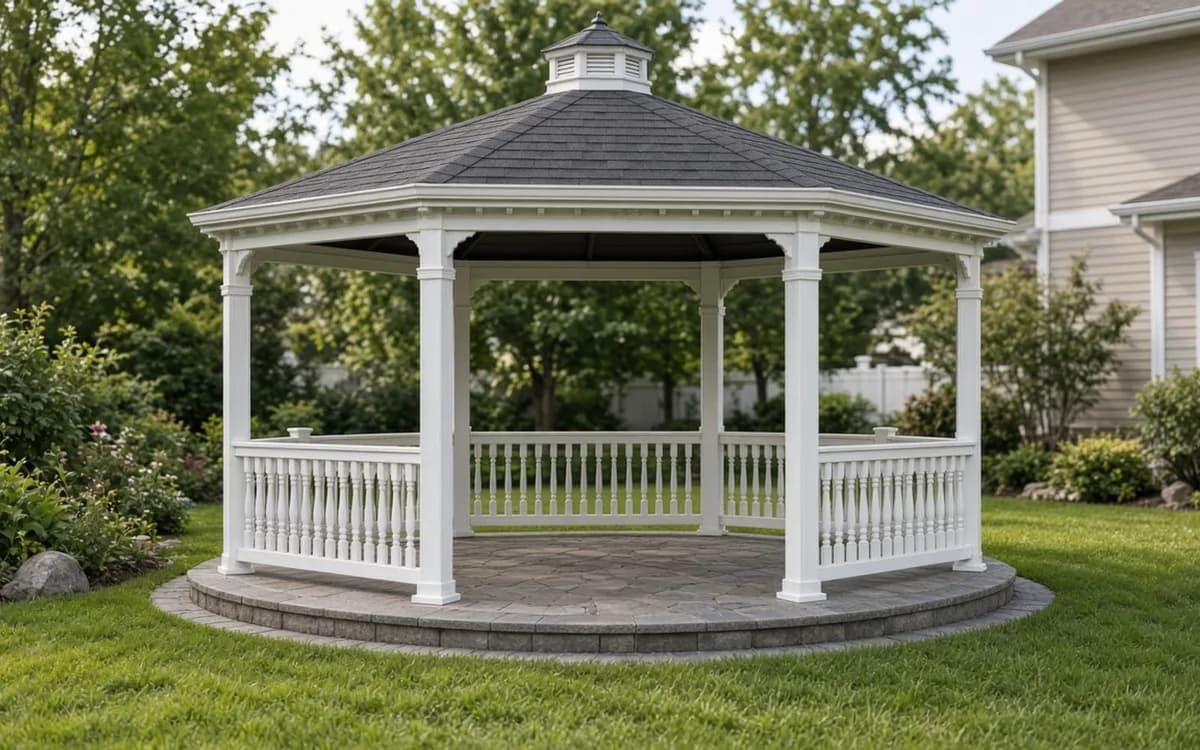
The base, cured and level to the model's tolerance, with the anchor pattern known. The kit, on site, with all boxes accounted for against the packing list and checked for freight damage before the driver leaves. A clear route from the boxes to the site wide enough for the longest beam. Power nearby if the kit has lights, and an electrician scheduled if they are hardwired. A permit if the footprint crosses the local threshold; Western Timber Frame's city guide shows exemptions from 80 to 200 sq ft, Gazebos R Us's 2025 state guide finds most gazebos under 120 sq ft are exempt, and a 12-by-12 at 144 clears some thresholds and not others.
The most common failed assembly day is a base that is not ready. Agree in writing who confirms the base is suitable for the exact model, and what happens to the schedule and the price if the crew arrives and cannot proceed. The services hub lists the exclusions that produce return-visit charges.
Snow load and wind speed, for the exact model and size. SUNJOY describes its metal gazebos in 50 / 70 / 100 mph wind tiers with snow capacities of 2,000 to 3,400 pounds, and advises that a 50 mph canopy comes down before winter in snow country. Backyard Oasis lists the Yardistry Meridian cedar gazebo at 36 psf / 65 mph snow and wind, the Exaco Rondo at 28 psf and 80 mph, and Amish custom wood or vinyl gazebos at 110 mph. Wellwhisk puts Backyard Discovery's Norwood 14-by-12 at 100 mph and 9,000 pounds of snow on 6-by-6 posts.
Compare these to your county's ground snow load and wind zone from the building department. A kit rated at 22 psf, which Wellwhisk reports for a Domi 10-by-12 hardtop, is a summer structure across most of the northern tier. Ratings assume the manufacturer's anchors in the manufacturer's base, which is why the assembler's anchoring method matters as much as the kit.
Kits ship in several boxes and freight damage is routine. Check every box against the manifest before signing for the delivery and photograph any crushed corners; most manufacturers require damage claims within days. Agree who opens and counts the parts, the owner or the assembler, and who contacts the manufacturer for replacements. Yardistry's 12-by-14 lists a 1-year materials and workmanship warranty and 5 years on lumber against rot, and replacement parts usually ship free under warranty but take days to weeks.
Ask the assembler what happens to the schedule and the price if a part is missing on day one. A crew that can build everything but the roof and return for a short second visit at a stated cost is the answer to look for. A crew that charges a full day to return is the answer to avoid.
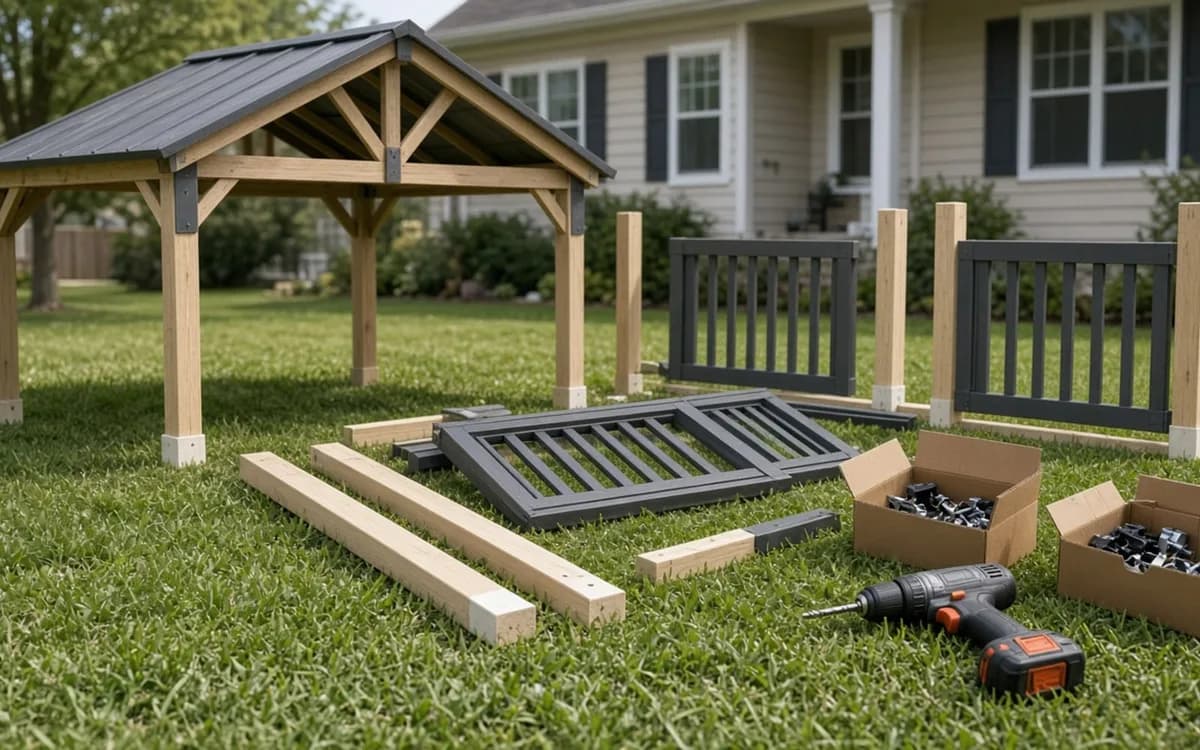
Lead time is the long part. Yardistry lists 6 to 12 weeks for assembly service on its 12-by-14 cedar gazebo, and spring orders on popular models can stretch further. Once on site, a 10-by-12 hardtop takes 10 to 20 hours per Wellwhisk, a heavy cedar kit a full weekend with a five-person crew; a professional crew typically finishes in one to two days. Roofing panels, screens and lights add hours, and hardwired electrical waits on the electrician. MasterCanopy puts a 10-by-10 pop-up canopy at 1 to 2 hours for one or two people and a 12-by-12 hardtop at 6 hours or more with two or three helpers; pop-up and soft-top canopies rarely justify a paid crew, so this page is about hardtop and wood kits.
Book the base, the delivery and the assembler in that order, with a week between base and delivery for curing and a few days between delivery and assembly for the parts check. Wellwhisk puts assembly of a 10x12 hardtop kit at 10 to 20 hours, and when a kit project slips, the usual cause is sequencing, not the build.
Cedar kits need the same care as any wood gazebo: a finish within the first season and reapplication every 1 to 2 years per Amish Wholesale Gazebos, plus a fastener check each spring since kit bolts loosen as wood dries. Steel hardtops need a look for chipped coating and rust at the base plates, and a clear roof channel where panels meet. Soft-top canopies come down for winter and last only 2 to 5 years per Modern Shade. Anchor bolts get checked after the first big wind. The restoration page covers what to do when a kit is ten years old.
Same lines for each: unloading and moving, parts inventory and who does it, base check, anchoring method, assembly, roofing panels, screens, electrical, packaging haul-away, schedule, and the stated cost and trigger for a return visit. Then price. A $900 proposal that excludes unloading and a return visit can cost more than a $1,400 proposal that includes both. LawnLove puts the labor to have a pre-built gazebo installed at $500 to $1,500; with assembly, the cheaper number is often the one missing lines. Read the reviews guide for the details that predict a careful assembler, and send the model number and site photos through the estimate request.
Homeowner polls
No votes yet. Yours will be the first. · saved on this device
No votes yet. Yours will be the first. · saved on this device
 Service guideCustom Gazebo Construction
Custom gazebo construction designs the interior dimensions, roof form, supports, base, screens and lighting as one scope for a specific garden or seating layout.
 Service guideGazebo Restoration & Repair
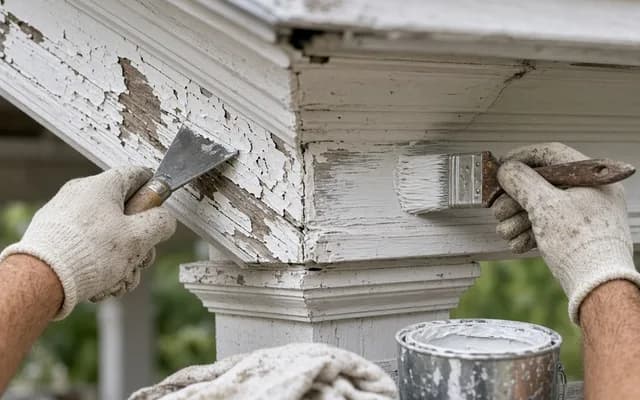
Gazebo restoration and repair covers leaking roofs, deteriorated posts, loose connections, worn decking and tired finishes on a structure worth keeping.
If the manufacturer allows it and the pavers sit on a compacted base, yes, usually with post brackets set into concrete pads beneath the paver layer or with engineered anchors. Surface-screwing base plates to loose pavers does not resist wind uplift. Ask the assembler which anchoring the model requires on pavers and get it in the proposal.
A path at least as wide as the longest roof panel or beam, commonly 4 to 6 feet on cedar kits, from the boxes to the site, plus working room around the base for ladders. Gates narrower than the panels mean carrying over fences or partial assembly at the curb. Send a photo of the route with the estimate request.
Note the damage on the delivery receipt before the driver leaves, photograph it, and file the claim with the manufacturer or retailer within their window, often a few days. Most will ship a replacement free. Agree with the assembler whether they build everything else and return, and at what cost, rather than waiting weeks to start.
No; assembly by anyone following the instructions is normal. What voids warranties is modifying parts, using non-specified anchors, or building on an unsuitable base. Some manufacturers offer their own assembly service, as Yardistry does with a 6 to 12 week lead time; independent assemblers are usually faster and often cheaper.
Possibly. At 120 square feet it is exempt in cities using a 120-square-foot threshold and over the line in Boulder's 80. Western Timber Frame's guide lists thresholds from 80 to 200 square feet with height caps of 8 to 15 feet, and some counties treat gazebos separately. Call the building department with the footprint and height.
Assembly crews connect the kit's included low-voltage or plug-in lights; hardwired circuits are a licensed electrician's job with its own permit in most jurisdictions. Fixr cites $40 to $120 an hour. Trench the conduit before the slab is poured and have the electrician do the final connection after assembly.
Buying it yourself gives you the retailer's price and return terms; having the assembler supply it puts one party responsible for the whole job, including damaged parts. If you buy it, order early enough for the parts check before the crew is scheduled, and confirm the assembler has built that model before.
Modern Shade gives galvanized steel gazebos 12 to 20 years, and SUNJOY's tiers suggest premium models rated to 70 or 100 mph outlast 50 mph units simply by surviving more storms. Keep the coating intact, check base plates for rust, and treat any 50 mph canopy as a seasonal structure in snow country.
 Free toolGazebo cost calculator
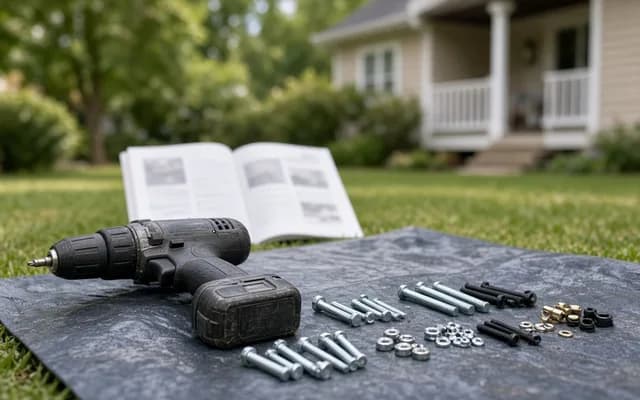
Size, material tier and complexity in, a realistic budget range out.
 Free toolCompare gazebo options
Side-by-side tables for the decisions that change the price most.
 Free toolGazebo planning quiz
10 questions that show what you already know and what to check next.
 Free toolGazebo polls
See what other planners chose and add your vote.
Tell us the size, the condition of what is there now, and what you want to change. Gazebo Guidebook passes your request to independent local professionals, who reply with written, no-obligation estimates. The service is free to use.