What will your gazebo mainly be used for?
Pick the use that would disappoint you most if the space were too small for it.
No votes yet. Yours will be the first. · saved on this device
Loading...
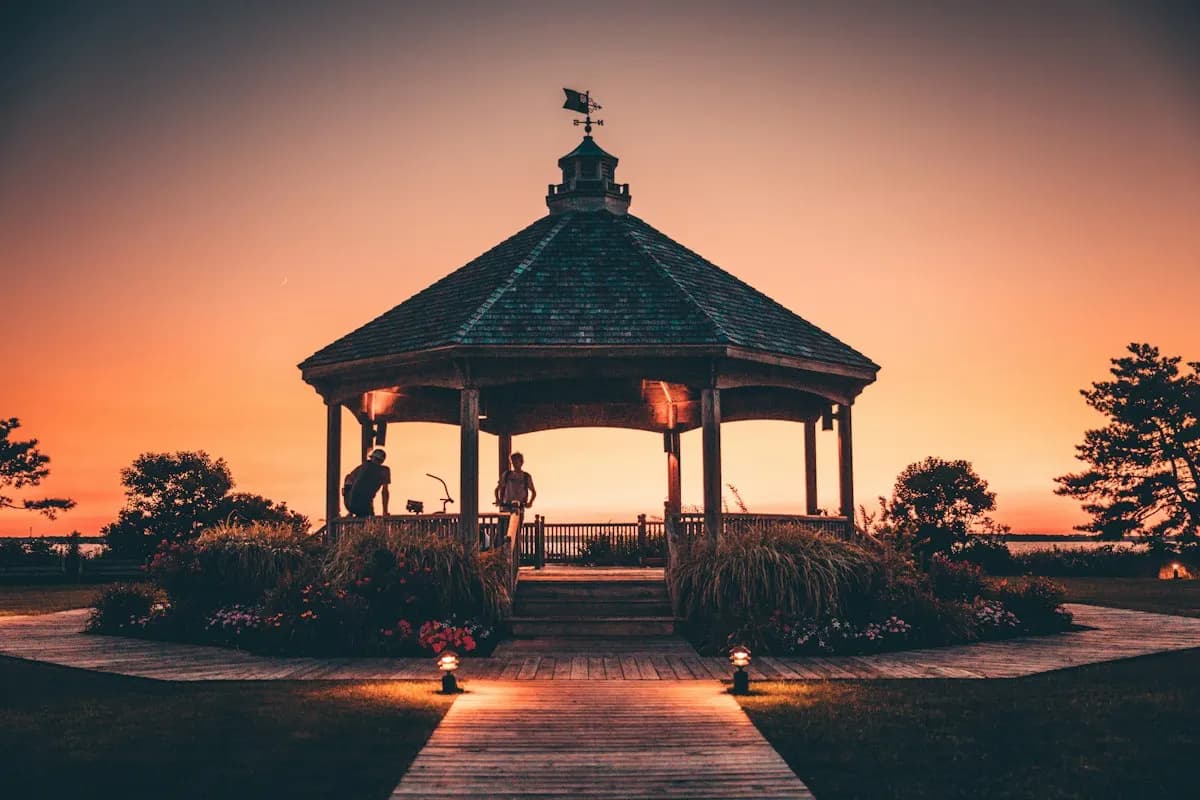
Gazebo Guidebook · Planning articles
The blog holds four long-form guides that sit between the service pages and an estimate request: how to plan a gazebo around the furniture and the site, what a built or assembled gazebo costs in 2026, which framing and roofing materials fit which climate, and when a permit is triggered. Each one cites the publisher behind every figure.
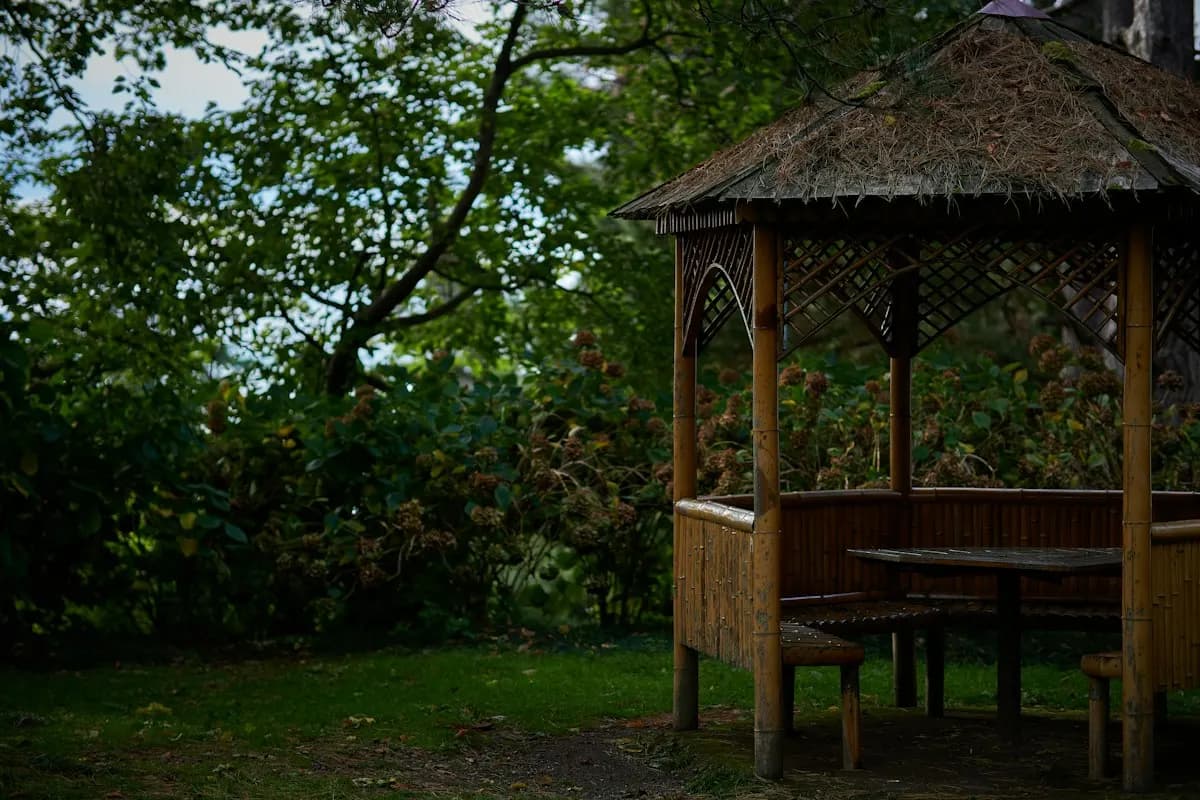
Photo: Andre Benz · License.
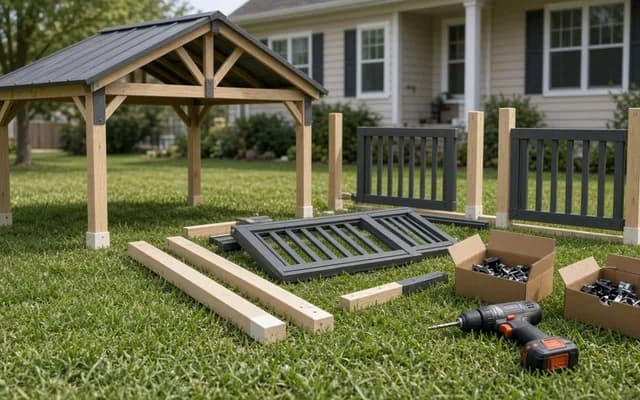 PlanningHow to plan a gazebo before anyone quotes it
Planning a gazebo means deciding the interior dimension from the furniture, choosing a spot for shade, drainage and the walk from the house, confirming what the structure will stand on, checking access for delivery and the county's snow and wind loads, and writing all of that into a one-page brief.
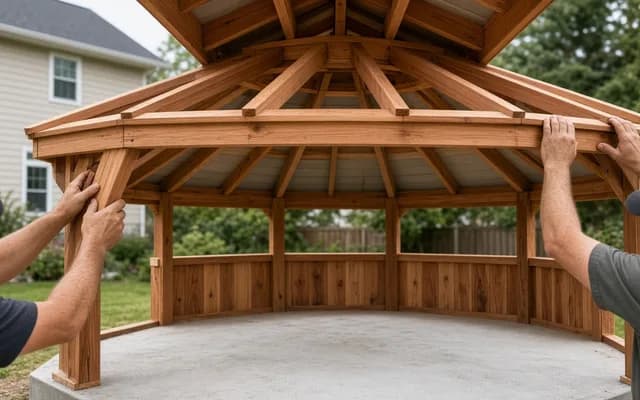 CostsWhat does a gazebo cost in 2026?
An installed gazebo costs $7,590 on average in LawnLove's national figures, and most homeowners pay $5,365 to $9,025; HomeAdvisor's lower $4,766 average includes many kit installs.
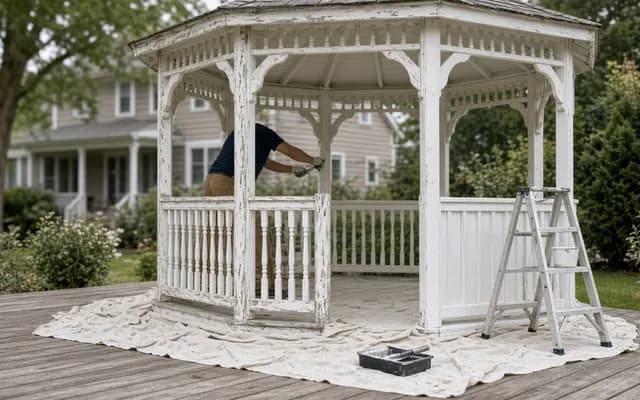 MaterialsGazebo materials and options: what lasts where
Gazebo framing comes in cedar, pressure-treated pine, vinyl over a core, aluminum and steel; roofs in asphalt shingle, metal, polycarbonate, wood shake, tile and fabric; floors in concrete, pavers, wood and composite.
PermitsGazebo permits and codes: what triggers review and what followsYes, in most U.S.
The service pages on this site answer what each scope includes and what it costs. These articles answer the questions that come before choosing a scope: how big the interior has to be, why Angi's overall average of $4,708 and Fixr's $8,750 for a 10-by-10 can both be right, what cedar costs you in weekends compared with vinyl, and which footprints put you in front of a plan reviewer.
Read them in the order below if the project is new to you. If you already own a gazebo and are deciding whether to fix it, start with the materials article and then the repair versus replace comparison. If a kit is already on order, the permits article is the one to read tonight.
Start with project planning if you have not yet measured anything. It walks through laying out the furniture, choosing the spot, checking the ground, and turning those findings into a brief a professional can price. Most expensive gazebo mistakes are made before anyone is hired, and this article is about the decisions that are still free to change.
Go to the 2026 cost guide once you know the footprint. It explains why the published national averages spread from HomeAdvisor's $4,766 to LawnLove's $7,590, what a per-square-foot figure does and does not include, and how to read a bid line by line. It is the article to keep open while proposals arrive.
The materials article compares framing in cedar, pressure-treated pine, vinyl, aluminum and steel, and roofing from asphalt through metal and polycarbonate, against lifespan figures from Modern Shade and Amish Wholesale Gazebos. It also covers floors, screens and the hardware that fails first, because a gazebo's weak point is rarely the material on the product page.
The permits article is honest that thresholds are local. It explains the typical footprint and height triggers, what the International Residential Code treats as an accessory structure, the inspection sequence for footings and framing, why electrical is almost always a separate permit, and what happens when a structure goes up without one. HOA rules get their own section because they catch more people than the building department does.
Each article links forward to the tool that acts on it. Planning feeds the sizing quiz; the cost guide feeds the calculator and the three per-service cost pages; materials feeds the comparison pages; permits feeds the estimate request, where you name who pulls each permit. The articles are longer than the service pages because they explain the reasoning rather than the scope.
The numbers are shared. Every figure in an article comes from the same set of sourced statistics used across the site, so the $75 to $100/sq ft on the cost guide is the same Fixr figure the calculator is calibrated to. When two publishers disagree, the article says so and explains why, which is usually a difference in what scope was being measured.
The Houzz 2026 Outdoor Trends Study found 71% of outdoor renovators hired a professional and 35% of outdoor-structure renovators upgraded shade structures, while MarketIntelo reports 42.1% of gazebo units sold are small, 8-by-8 to 10-by-10. That describes the typical reader: someone buying or building a modest structure and hiring the work out, who wants to know enough to judge a proposal rather than enough to build it.
The articles assume no construction background. Terms are defined the first time they appear and collected on the glossary page, so a proposal that says standoff base or hub flashing can be read without a phone call. Where a decision depends on your county, the article says which office to call and what to ask, rather than pretending a national rule exists.
The cost tables cited come from Angi's July 2026 update, HomeAdvisor's and HomeGuide's 2026 guides, Fixr's 2025 guide and Homewyse's September 2026 figures. When a publisher revises a table the site's statistic changes and every article that tokenises it changes with it. Behavioral figures come from the newest editions, such as Houzz's 2026 Houzz & Home Study, which found 50% of surveyed homeowners plan to renovate in 2026. Older ones, such as the National Association of Realtors' 2023 outdoor features report, are kept because no newer edition covers the same items.
If a figure you need is missing, the polls fill part of the gap. The poll pages show what other planners chose for size, shape, material and budget, which is useful context even though a tally is not a statistic. Where neither a published figure nor a poll answers the question, the article says so and points to the written proposal as the only real number.
Homeowner polls
Pick the use that would disappoint you most if the space were too small for it.
No votes yet. Yours will be the first. · saved on this device
No votes yet. Yours will be the first. · saved on this device
No votes yet. Yours will be the first. · saved on this device
Yes. The service pages describe one scope each, custom construction, kit assembly or restoration, with a cost table and a proposal checklist. The articles cut across all three: planning applies whether you build or buy, the cost guide compares scopes side by side, materials applies to new and old structures, and permits apply to anything over the local threshold. Read an article for reasoning and a service page for the scope you have chosen.
Between eight and twelve minutes each at a normal pace; they run 1,500 to 2,400 words with seven to nine questions at the end. The planning and cost articles are the two most people need in full. The materials and permits articles are organised so you can jump to the section on your material or your footprint and skip the rest.
No. Where a manufacturer's published rating is useful as an example, such as Yardistry's or Backyard Discovery's snow and wind figures, it is named as a data point, not a recommendation. The site does not sell or rank products. The comparison pages weigh categories, cedar against vinyl or kit against custom, and leave the model choice to you and the professional you hire.
You can, and the proposal checklists in the cost and permits articles are written for that purpose. A more useful step is to copy the checklist items into your estimate request so every matched professional answers the same questions. Pros generally welcome a homeowner who has already decided the interior dimension, the base and who pulls the permit.
Because no single guide measures the same thing. Angi's overall average includes small kit assemblies, Fixr's national average is a built 10-by-10, LawnLove's sits between them, and HomeAdvisor's normal range covers everything from soft-tops to custom work. Naming the publisher with each number lets you see what scope it describes and judge whether it matches your project.
Not a standalone one. Electrical is covered where it matters: the planning article on trenching conduit before the base goes in, the cost guide on the electrician's hourly rate Fixr reports and the separate permit, and the permits article on why low-voltage and hardwired work are treated differently. Houzz found 66% of renovated outdoor lounge areas add lighting, so the topic runs through all four.
Tape out the furniture, take the sizing quiz, run the calculator with your footprint, and write a one-page brief with the interior dimension, site photos, base condition, kit model if chosen, and the permit responsibility you expect the pro to take. Then send it once through the estimate request so several local professionals quote the same project.
 Service guideCustom Gazebo Construction
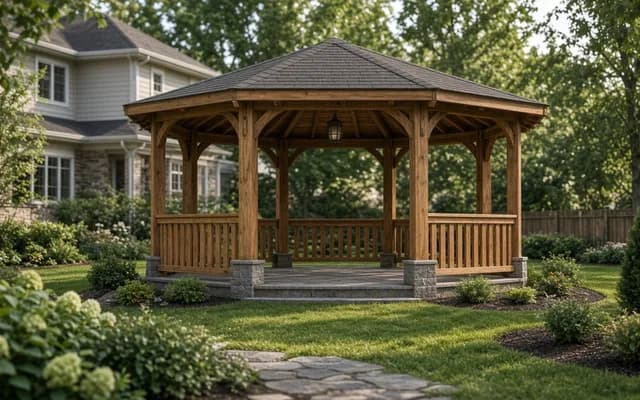
Custom gazebo construction designs the interior dimensions, roof form, supports, base, screens and lighting as one scope for a specific garden or seating layout.
 Service guideGazebo Kit Assembly
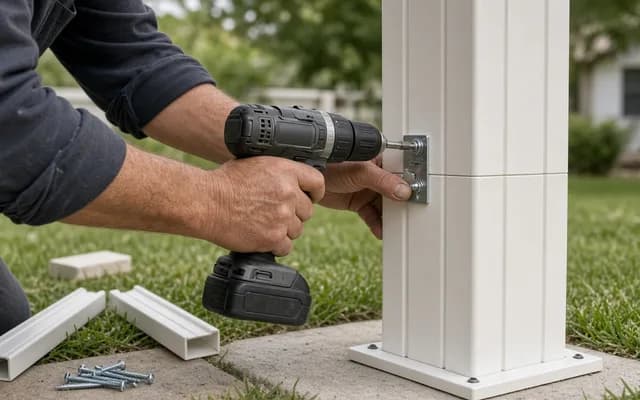
Gazebo kit assembly is the professional build of a delivered kit on a prepared base: unloading, parts inventory, anchoring, assembly, roofing and cleanup.
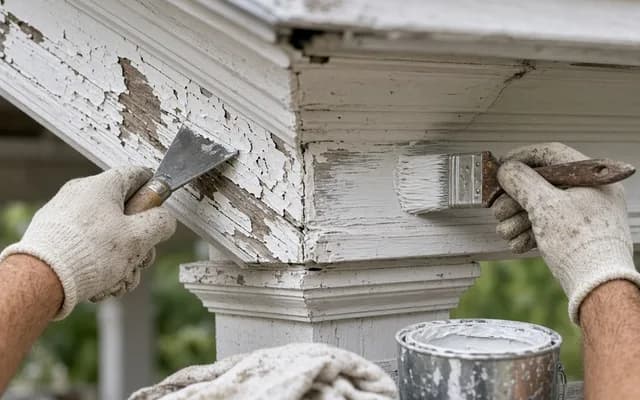 Service guideGazebo Restoration & Repair
Gazebo restoration and repair covers leaking roofs, deteriorated posts, loose connections, worn decking and tired finishes on a structure worth keeping.
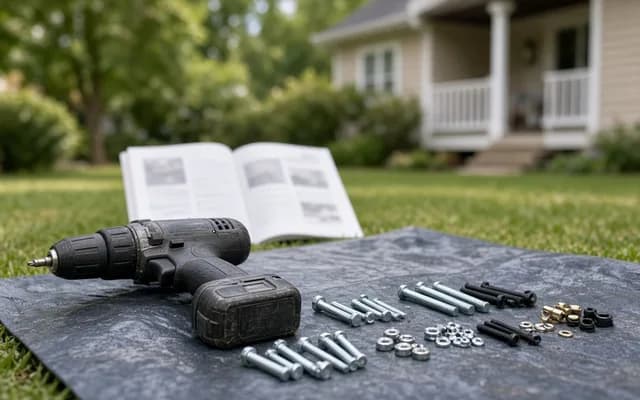 Free toolGazebo cost calculator
Size, material tier and complexity in, a realistic budget range out.
 Free toolCompare gazebo options
Side-by-side tables for the decisions that change the price most.
 Free toolGazebo planning quiz
10 questions that show what you already know and what to check next.
 Free toolGazebo polls
See what other planners chose and add your vote.
Tell us the size, the condition of what is there now, and what you want to change. Gazebo Guidebook passes your request to independent local professionals, who reply with written, no-obligation estimates. The service is free to use.