Which framing material do you prefer?
No votes yet. Yours will be the first. · saved on this device
Loading...
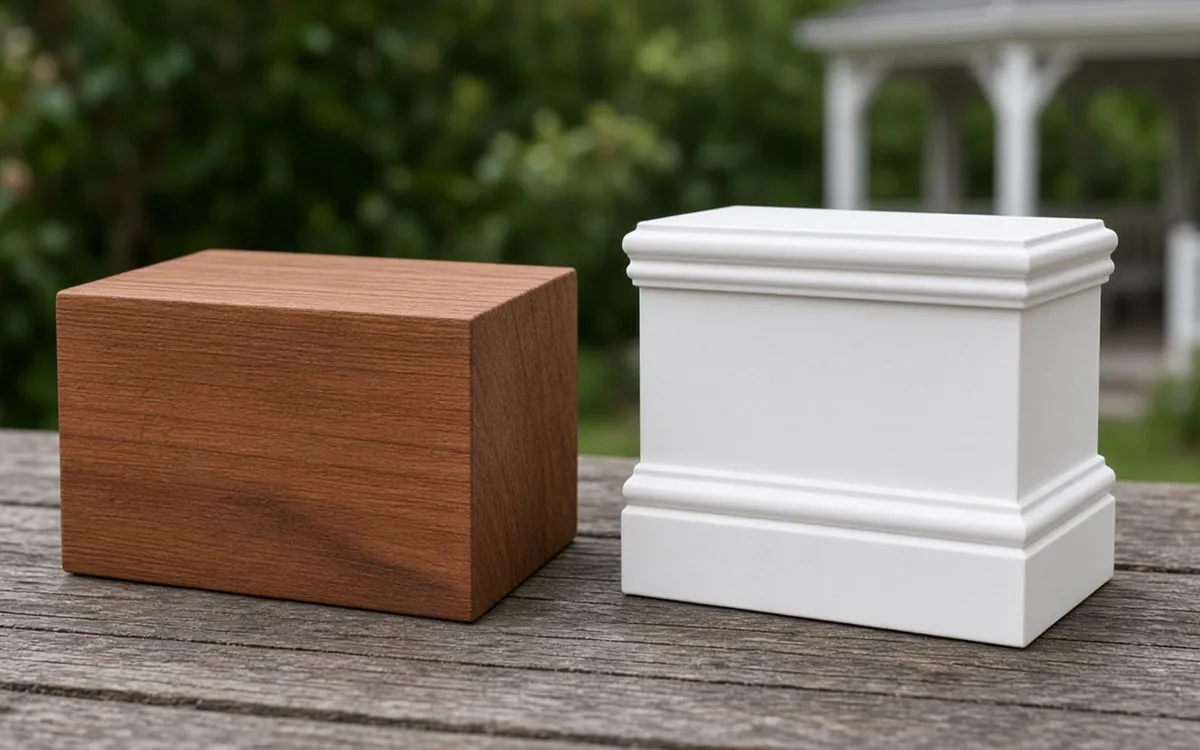
Gazebo Guidebook · Cedar gazebo vs Vinyl gazebo
Cedar costs less up front, repairs easily and looks like a garden building, but needs finish every one to two years to reach 20 to 25 years. Vinyl costs more in materials, needs only washing, and reaches 20 to 30 years, with the risk hidden at the post base. Over ten years the cost difference narrows once the finish schedule is priced.
The table on this page sets out the trade-off in rows; this text covers what the rows leave out: what happens to each material in year three when the finish is overdue, what the ten-year cost really is once stain, labour and a re-roof are counted, and which climates tilt the answer. Angi's 2026 table puts small wood gazebos at $4,000 to $7,000 and vinyl at $2,000 to $3,500, but those describe different unit sizes, which is the first trap.
Cedar buys warmth, repairability and a natural finish; vinyl buys two or three decades without staining. Vinyl costs more in materials and less in weekends.
| Factor | Cedar gazebo | Vinyl gazebo |
|---|---|---|
| Upfront cost | $4,000 to $7,000 materials (Fixr); $4,000 to $7,000 project (Angi 2026) | $6,800 to $9,000 materials (Fixr); $2,000 to $3,500 for small vinyl units (Angi 2026) |
| Lifespan | 20 to 25 years with maintenance (Modern Shade) | 20 to 30 years (Amish Wholesale Gazebos) |
| Maintenance | Seal or stain annually, reapply every 1 to 2 years, fastener checks | Wash; inspect core at post bases and fasteners |
| Appearance | Natural grain, ages to silver if unfinished, takes custom trim | Clean white or tan, uniform, can read as plastic up close |
| Climate fit | Suits dry and temperate climates; demanding in humid South and arid West | Strong in humidity and coast; can chalk in intense UV |
| Install time | Similar; kits a weekend, custom one to two weeks | Similar; vinyl kits often lighter to handle |
| Resale and ROI | Nearest benchmark: new patio recovers 95% (NAR 2023) | Same benchmark; buyers value low upkeep |
| Best for | Owners who will keep a finish schedule and want wood | Owners who want to stop staining, humid or coastal yards |
Cedar wins when you want the gazebo to look like a garden building rather than a product, when repairs by a local carpenter matter, and when you will honestly reapply finish every year or two. On that schedule Modern Shade gives it 20 to 25 years.
Vinyl wins when maintenance is the deciding factor, when the yard is humid or coastal, and when the extra materials cost is worth never buying stain again. Amish Wholesale Gazebos gives it 20 to 30 years. Both are covered on the custom construction page and in kit form on the assembly page.
The cedar owner who keeps the schedule has a warm, dark-honey structure that photographs well and smells like a sauna after rain. The cedar owner who does not has a silver-grey frame with black streaks at the fastener heads and a soft spot at the base of the shadiest post by year eight. Both are common. Amish Wholesale Gazebos describes finish reapplication every 1 to 2 years, and the honest question is whether you will do it in year three when the novelty has worn off.
The vinyl owner has a white or tan structure that looks the same in year eight as year one from ten feet away, with a green film on the north side that hoses off. Up close the seams and the plastic sheen read as a product rather than a building. The failure mode is quiet: water gets into the post base, the wood core rots inside the cladding, and the first sign is a post that flexes. Standoff bases and a sealed base are the whole defence.
Up front, Fixr's materials table gives wood at $4,000 to $7,000 and vinyl at $6,800 to $9,000 for a comparable structure, a premium of roughly $2,000 to $3,000 for vinyl. Over ten years cedar needs five to ten finish cycles. A homeowner doing it with a few hundred dollars of stain each time spends $1,500 to $3,000 and several weekends; a pro doing a 10 to 12 foot structure at up to $1,500 a visit spends far more. On that arithmetic the vinyl premium is repaid somewhere between year four and year eight.
Both need the same roof, and Angi's roofing table applies equally: shingles at $3 to $5/sq ft, metal at $5 to $30/sq ft. Both need the same base. So the ten-year difference is almost entirely finish labour, and it favours vinyl unless the owner enjoys the work. The calculator's premium tier prices vinyl; the built tier prices cedar. Run both for your footprint.
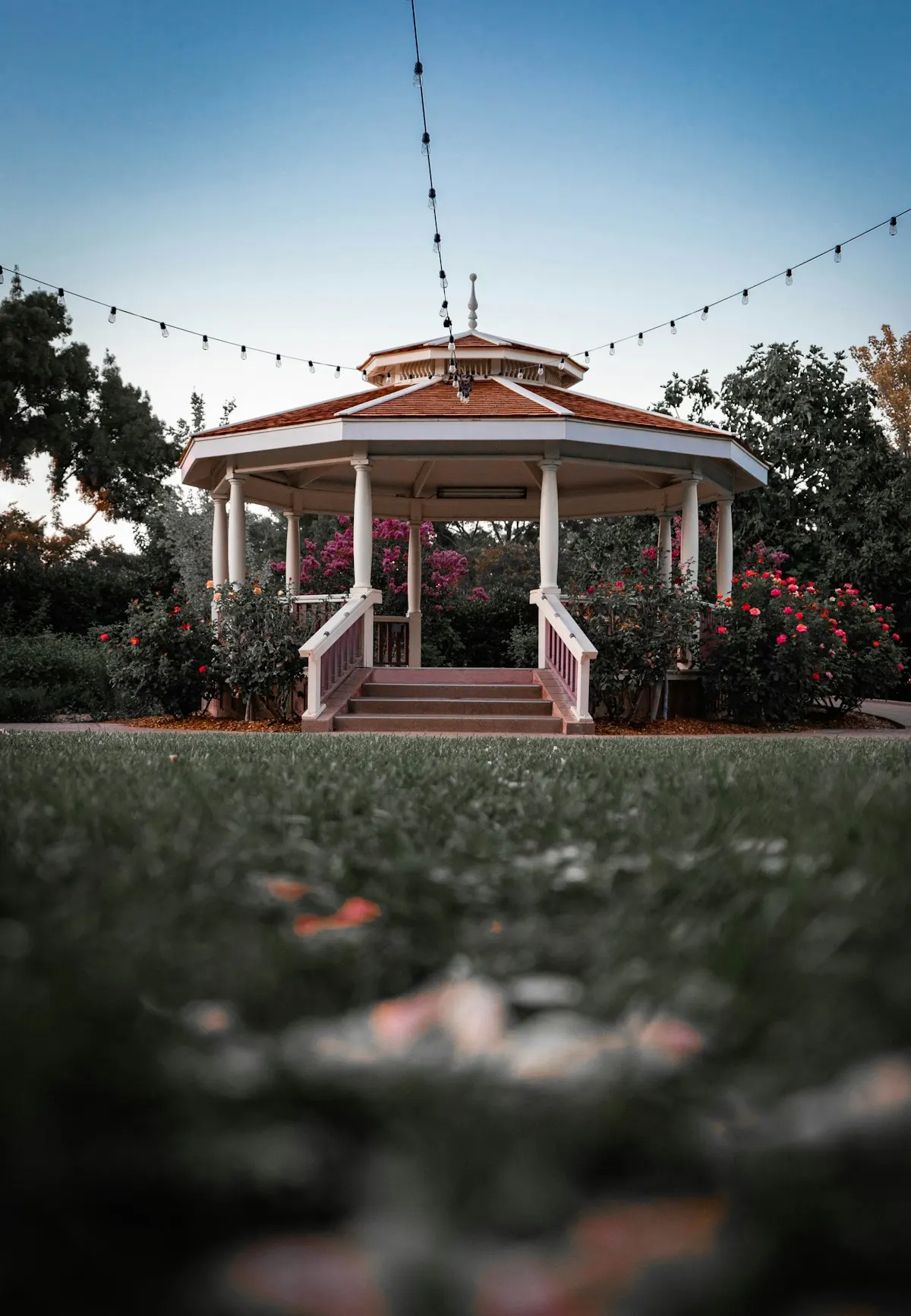
Humid, coastal and rainy climates favour vinyl. Modern Shade puts Florida gazebo lifespan at 7 to 12 years against a national 10 to 20 years, and most of that penalty falls on wood finish that cannot keep up with humidity and salt. Vinyl over an aluminum core is the low-maintenance answer on the Gulf and Atlantic coasts, in the Pacific Northwest rain, and anywhere the structure sits in shade and stays damp.
Dry, temperate and cold-dry climates favour cedar. The wood dries between rains, the finish lasts toward the long end of the interval, and rot is slow. Intense high-desert UV is hard on both: it greys cedar quickly and can chalk vinyl, and a shaded location or a solid roof with generous overhangs helps either. Snow load is neutral between them since the roof framing is sized the same; the regional page lists typical loads.
Neither material has its own resale study. The nearest benchmarks come from the National Association of Realtors' 2023 report, where a new patio recovered 95% of its cost and 97% of Realtors said curb appeal matters in attracting a buyer. What that translates to is condition: a freshly finished cedar gazebo and a clean vinyl one both help a listing; a grey, streaked cedar one hurts it.
Buyers who ask about upkeep tend to prefer vinyl; buyers who react to photographs tend to prefer finished cedar. In the year before a sale the cedar owner should finish it and the vinyl owner should wash it and check the post bases. Houzz found 53% of outdoor renovators cite improved appearance as a goal, and both materials deliver it if maintained.
Cedar mistakes: setting posts on concrete without standoff bases, finishing with an interior product, waiting until the wood is grey to apply the first coat, using bright fasteners that streak, and leaving the roof hub unflashed so the rafters rot from the top. Most are avoidable at the proposal stage by asking for the post base, fastener and hub detail in writing.
Vinyl mistakes: assuming the core cannot rot, skipping the base seal, buying a thin-wall product that dents and flexes, choosing a colour the HOA will not approve, and comparing Angi's small-unit vinyl range with a full-size wood range. The materials article covers the hardware details that apply to both, and the custom construction page lists the proposal items.
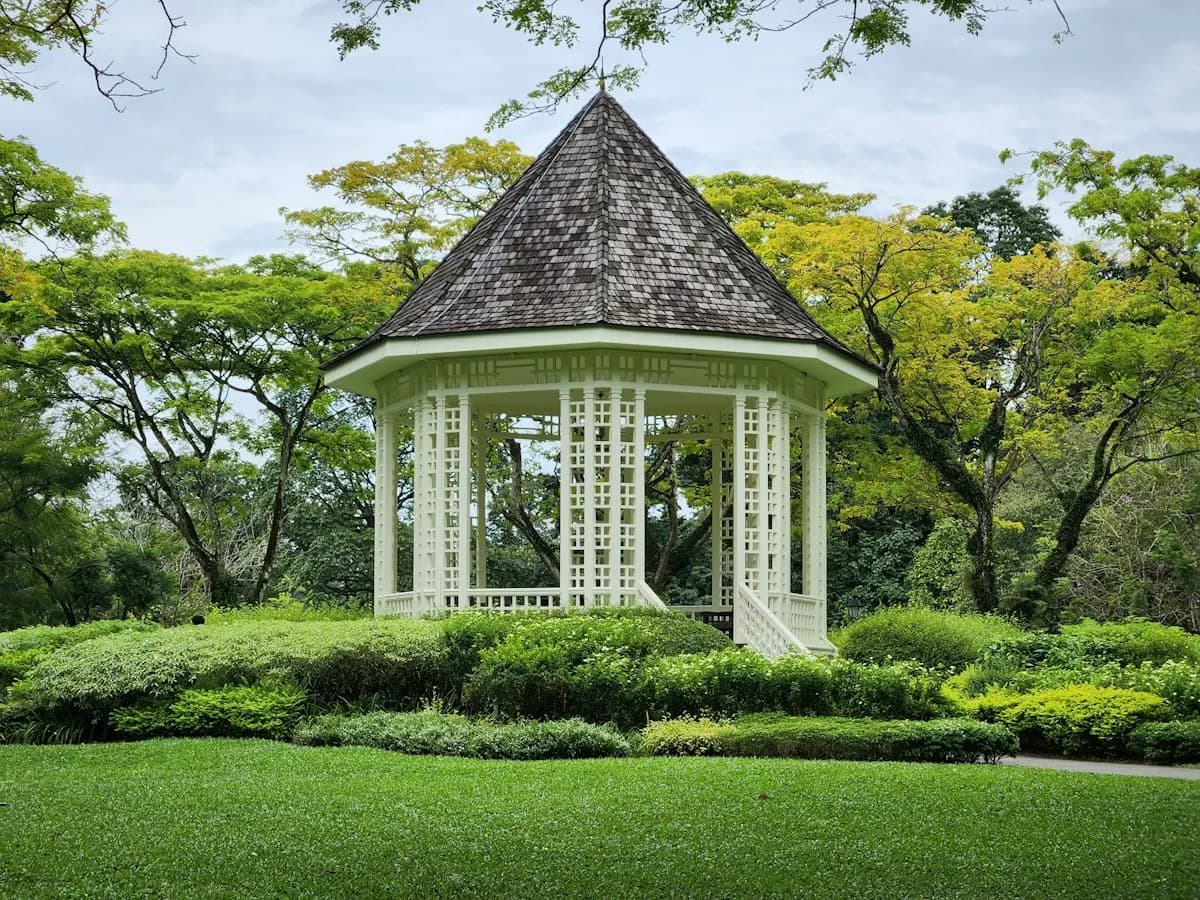
Bring them to the same structure first: same interior between posts, same roof, same base, same screens. Then add a ten-year finish line to the cedar bid, priced either as your own weekends or at a pro's rate. Compare the totals with the finish included and ask yourself which total you would rather pay. Check that the vinyl bid names the core material and the standoff base, and that the cedar bid names the finish product and the fastener grade.
If the numbers are close, the decision is about taste and habit, not money. If the vinyl bid is far above the wood range Fixr publishes, ask why; if the cedar bid is far below Homewyse's $64 to $95/sq ft for wood installation, something is missing. Send the same brief to several pros through the estimate request and ask each for both materials as alternates.
Homeowner polls
No votes yet. Yours will be the first. · saved on this device
No votes yet. Yours will be the first. · saved on this device
Usually a wood or aluminum core inside vinyl sleeves and cladding, which is why the post bases still need to stay dry. The vinyl stops UV and moisture from reaching the core, but water trapped inside a sleeve rots it. Standoff bases and drainage at the post bottom matter as much as on cedar.
Yes, and many owners prefer it. The color change is cosmetic, but checking and rot at post bases are not, so seal end grain and use standoff bases even if you skip stain on the rest. Expect the shorter end of the lifespan range without finish.
Not practically. Vinyl gazebos are built as clad systems from the start, with the cladding sized to the core members. Wrapping an existing cedar frame in vinyl trim is possible in places but traps water against the wood and usually hastens rot. If maintenance is the reason for the change, the realistic options are a durable finish system on the cedar or a replacement structure.
Modern outdoor vinyl formulations carry impact modifiers and handle northern winters; the older complaints about cracking came from thin, uncoated products. Cold makes any vinyl stiffer, so avoid striking it with a snow shovel and clear roof snow gently. Ask the manufacturer for the wall thickness and the UV and impact ratings; the thicker products cost more and last longer.
For a 10 to 12 foot structure, a labour-and-material finish job typically runs a few hundred dollars up to about $1,500 depending on preparation, coats and access, which is the figure the restoration cost table on this site uses. Doing it yourself costs the stain and two weekends. Multiply by the number of cycles Amish Wholesale Gazebos describes, every 1 to 2 years, for the ten-year figure.
Some. Ipe and other dense tropical hardwoods weather to grey without rotting and are common for floors but rarely frames, and they cost more. Thermally modified pine and ash resist rot without chemicals and take finish well. Redwood behaves like cedar. None escape the finish interval entirely if you want to keep the colour; if you accept grey, cedar itself can be left unfinished with standoff bases and a good roof.
Cedar. Any carpenter can scarf in a new rafter or replace a post with lumber from a yard. Vinyl components are model-specific, come from the manufacturer or an Amish shop, and may be discontinued after some years. Ask a vinyl supplier about parts availability and keep the model documentation. For both, most storm damage is roofing, which is repaired the same way.
The rating comes from the design and the anchoring, not the cladding. Backyard Oasis notes Amish custom gazebos in both wood and vinyl rated to 110 mph, because the same heavy core members and fasteners are used under either finish. A vinyl kit with thin aluminum cores may be rated far lower. Read the rating letter for the actual model rather than assuming by material.
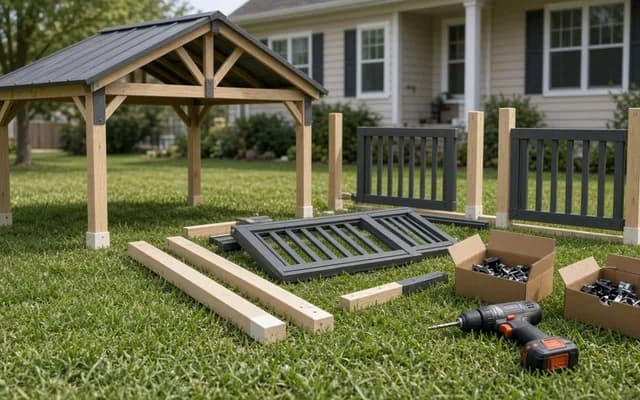 ComparisonGazebo kit with assembly vs Custom-built gazebo
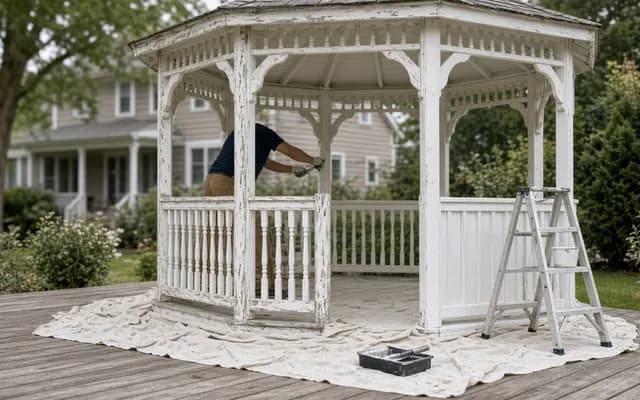
A kit with professional assembly costs $3,600 to $8,600 for the product plus $500 to $1,500 to assemble and delivers a known interior at a known rating in a weekend.
 ComparisonAsphalt shingle roof vs Metal roof
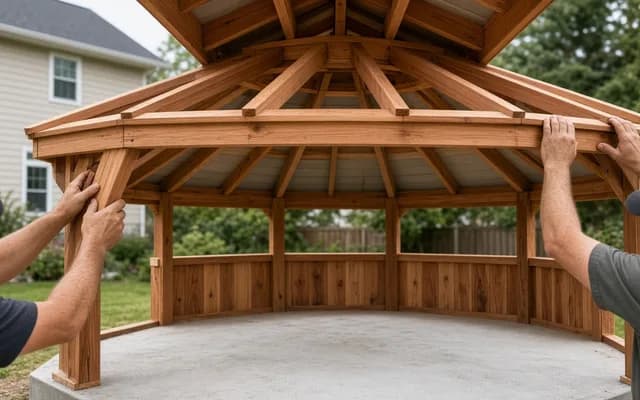
Asphalt shingles cost $3 to $5 per square foot, match the house and are patched by any roofer; metal panels cost $5 to $30 per square foot, shed snow and leaves, and usually outlast the frame.
 ComparisonOctagonal gazebo vs Rectangular gazebo
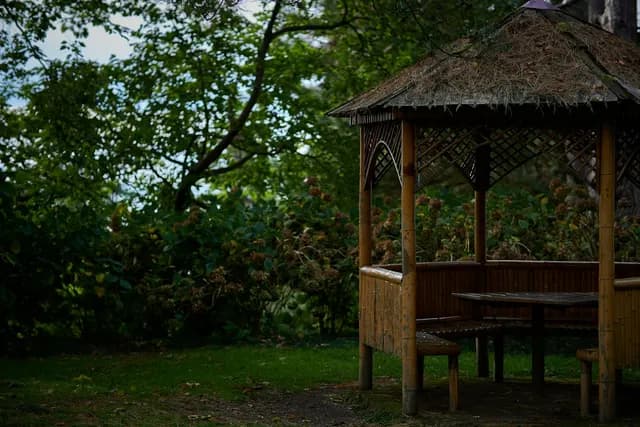
An octagonal gazebo costs $5,000 to $12,000 installed against $3,000 to $10,000 for a rectangle in Fixr's shape table, and its eight-sided plan seats four comfortably where a rectangle of similar footprint seats six or more.
ComparisonRestore the existing gazebo vs Replace with a new build or kitRepair when the posts are sound at grade, the frame is stiff under a push and the hub can be re-flashed, and the list is roof, screens, floor and finish.
 ComparisonGazebo vs Pergola
A gazebo has a solid roof, keeps off rain and costs about $7,590 on average installed per LawnLove, with most paying $5,365 to $9,025.
 Service guideCustom Gazebo Construction
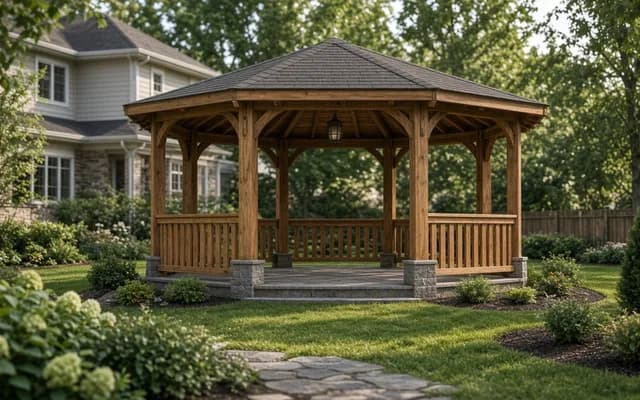
Custom gazebo construction designs the interior dimensions, roof form, supports, base, screens and lighting as one scope for a specific garden or seating layout.
 Service guideGazebo Kit Assembly
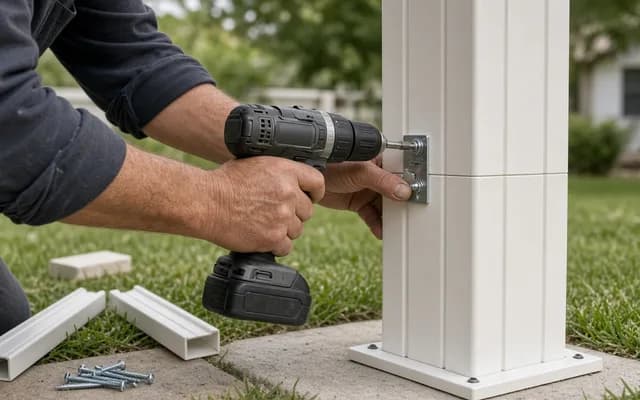
Gazebo kit assembly is the professional build of a delivered kit on a prepared base: unloading, parts inventory, anchoring, assembly, roofing and cleanup.
 Service guideGazebo Restoration & Repair
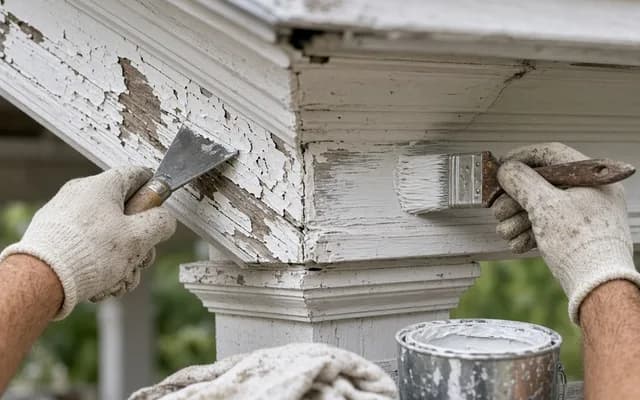
Gazebo restoration and repair covers leaking roofs, deteriorated posts, loose connections, worn decking and tired finishes on a structure worth keeping.
 Free toolGazebo cost calculator
Size, material tier and complexity in, a realistic budget range out.
 Free toolGazebo planning quiz
10 questions that show what you already know and what to check next.
 Free toolGazebo polls
See what other planners chose and add your vote.
Tell us the size, the condition of what is there now, and what you want to change. Gazebo Guidebook passes your request to independent local professionals, who reply with written, no-obligation estimates. The service is free to use.