What will your gazebo mainly be used for?
Pick the use that would disappoint you most if the space were too small for it.
No votes yet. Yours will be the first. · saved on this device
Loading...
Gazebo Guidebook · Gazebo vs Pergola
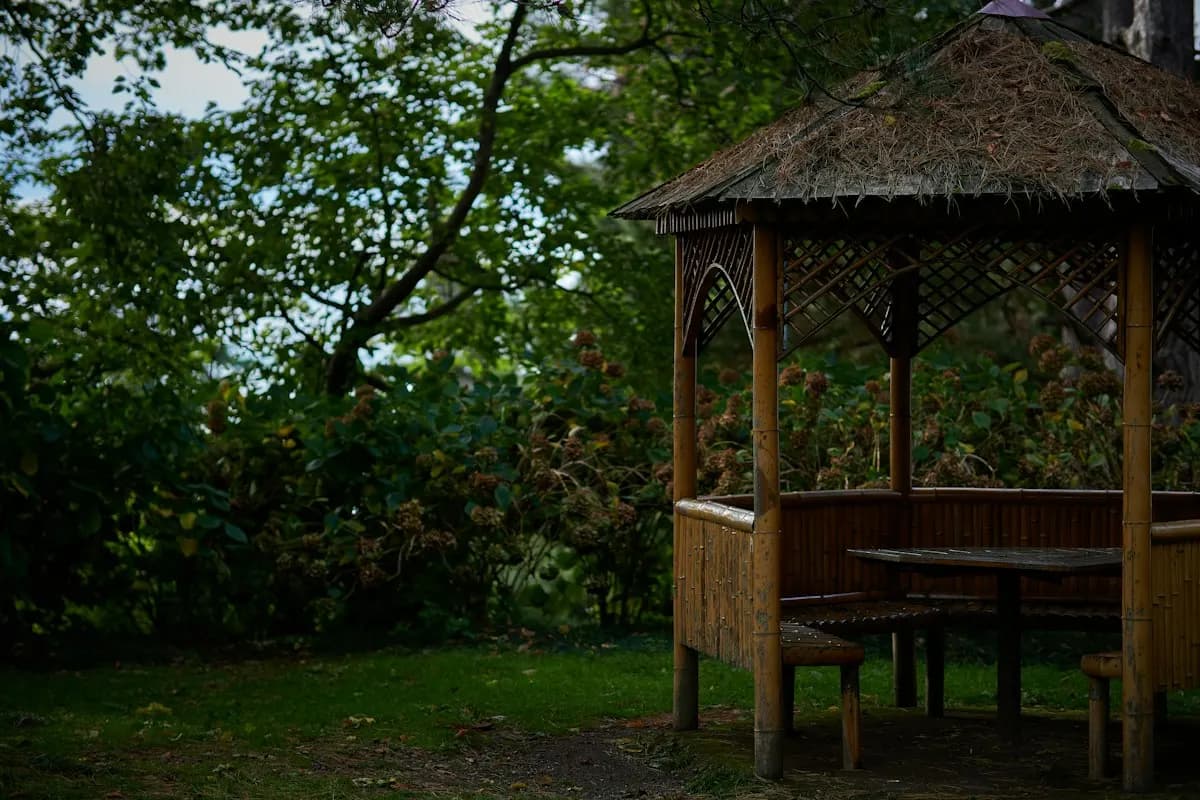
A gazebo has a solid roof, keeps off rain and costs about $7,590 on average installed per LawnLove, with most paying $5,365 to $9,025. A pergola has an open beam roof that filters sun, can attach to the house and averages $4,000, typically $2,100 to $6,000. A louvered pergola closes against rain for an extra $25 to $130 per square foot.
Photo: Karen Kasparov · License.
The two structures answer different questions. A gazebo is a freestanding room with a roof, a floor and often screens; a pergola is a frame of posts and beams that turns a patio into a shaded outdoor room without closing it off. LawnLove's national averages, $7,590 for a gazebo against $4,000 for a pergola, capture the difference in how much structure you are buying. This page covers where each belongs, what each costs by size, how weather and permits change the choice, what holds value, the mistakes each invites and how to compare the bids.
A gazebo is a freestanding room under a solid roof that keeps off rain and holds snow; a pergola is an open beam roof that filters sun and can attach to the house. LawnLove's national averages put a gazebo at close to twice the price of a pergola.
| Factor | Gazebo | Pergola |
|---|---|---|
| Upfront cost | $7,590 average; most pay $5,365 to $9,025 (LawnLove) | $4,000 average; most pay $2,100 to $6,000 (LawnLove) |
| Cost per sq ft | $70 to $100 installed (LawnLove) | About $37; a louvered roof adds $25 to $130 (LawnLove) |
| Rain and snow | Solid roof sheds rain; frame rated for snow load (Yardistry Meridian 36 psf) | Open slats filter sun only; louvered or covered versions close against rain |
| Shape and placement | Square, hexagonal, octagonal or dodecagon; freestanding | Square or rectangular; freestanding or attached to the house |
| Install time | 10 to 20 hours for a 10-by-12 hardtop kit (Wellwhisk); weeks for custom | About four hours for two people on an aluminum kit (Mirador, manufacturer claim) |
| Maintenance | Roof, hub flashing, and finish every 1 to 2 years on wood | Finish on wood; little on aluminum; no roof to leak unless covered |
| Permits | Roofed accessory building; local exemptions 80 to 200 sq ft (Western Timber Frame) | Open frames often reviewed more simply; attached pergolas usually need a permit (SUNJOY) |
| Best for | Dining through showers, screened rooms, a garden destination | Filtered shade over a patio, a house-attached outdoor room, tighter budgets |
The gazebo wins when the space has to work in the rain, when you want screens and a floor that make it a room, or when it sits out in the garden as a place to walk to. LawnLove's average of $7,590 is the price of a real roof, and in snow country that roof has to carry a rated load.
The pergola wins when the goal is dappled shade over a patio that already exists, when the structure should attach to the house, or when the budget sits nearer LawnLove's pergola average of $4,000. A louvered roof closes most of the weather gap at a price; the full gazebo versus pergola comparison works through costs, climate and permits.
A gazebo earns its place when the space has to work in bad weather. A family that eats outside through summer showers, a yard with mosquitoes that calls for screens, or a garden where the structure sits away from the house as a place to walk to all point to a solid roof. The roof also makes a gazebo the better shelter from midday sun: our analysis of the EIA's 2024 household survey found 55.6% of occupied U.S. homes have no large shade trees near the house, and in those yards the structure is the only shade there is.
A pergola earns its place over a patio that already exists, beside the house, where filtered light matters more than a dry floor. Lancaster County Backyard describes the pergola's slatted roof as letting far more sun through, and its square or rectangular frame can attach to the house wall or stand alone. It makes a patio feel like a room without darkening the windows behind it. It also suits a climbing plant, which fills the slats in two or three seasons and gives shade that moves with the day.
LawnLove publishes both guides with the same size bands, which makes the comparison unusually clean. A pergola runs about $37 per square foot against $70 to $100 for an installed gazebo, so at any footprint the gazebo costs roughly two to three times as much. The table in this section uses LawnLove's December 2025 figures for both structures.
The louvered pergola is the middle option. Its adjustable roof blades close into a watertight ceiling, which Mirador, a louvered-pergola maker, describes as the way a pergola gains a gazebo's rain protection. LawnLove prices a louvered roof at $25 to $130/sq ft on top of the frame. On a 12-by-12 that adds $3,600 to $18,720, based on 144 square feet at LawnLove's rate, which puts a louvered pergola anywhere from below a built gazebo to well above it. Over ten years, a gazebo adds roof and hub maintenance and a wood finish every 1 to 2 years; a plain aluminum pergola adds little, and a louvered one adds motor and seal upkeep.
| Footprint | Gazebo, installed (LawnLove) | Pergola (LawnLove) |
|---|---|---|
| 64 sq ft (8 x 8) | $4,480 to $6,400 | $1,280 to $3,840 |
| 100 sq ft (10 x 10) | $7,000 to $10,000 | $2,000 to $6,000 |
| 144 sq ft (12 x 12) | $10,080 to $14,400 | $2,880 to $8,640 |
| National average | $7,590 | $4,000 |
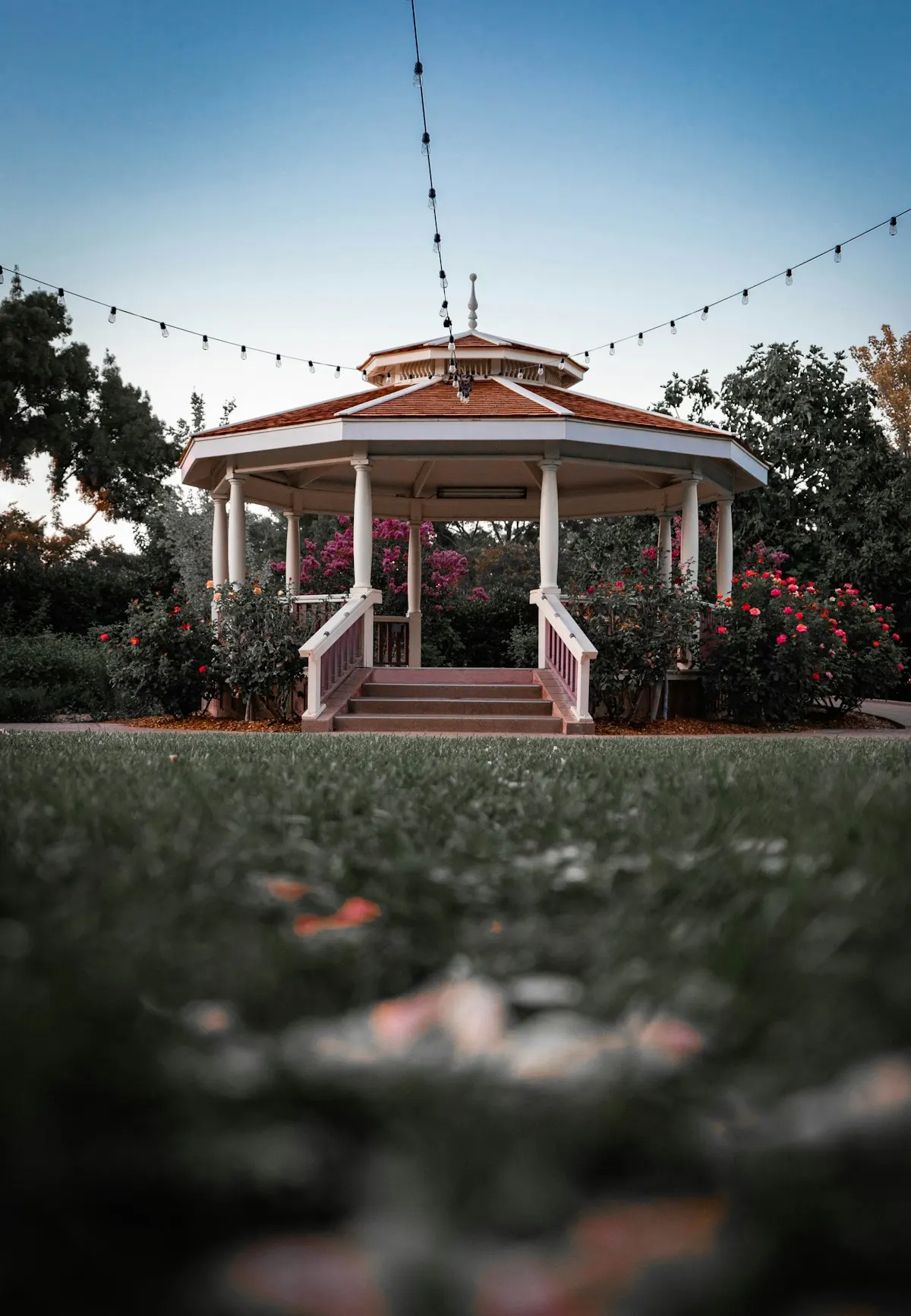
Rain is the dividing line. An open pergola filters sun and does nothing for a shower; a retractable shade cover helps with sun and light rain, and only a louvered or solid-covered roof keeps a table dry. A gazebo's roof sheds rain by design, and with a cupola and flashed hub it stays dry in a storm. In rainy regions, a plain pergola is a summer-afternoon structure.
Snow runs the other way. A pergola's open beams hold little snow, so snow load rarely governs its design. A gazebo roof has to carry the county's ground snow load: Backyard Oasis lists the Yardistry Meridian cedar gazebo at 36 psf / 65 mph, and a louvered pergola closed in winter becomes a flat roof that has to be rated the same way. Wind loads both, and both need anchoring into footings or a slab. Sun favours whichever you will use at midday: a solid gazebo roof blocks it, a pergola softens it, and a plant-covered pergola does both by August.
Either can, and the rule depends on size, height and attachment more than on the name. Western Timber Frame's city guide shows local exemptions of 80 to 200 sq ft; Boulder's under-80-square-foot exemption names pergolas alongside sheds, while Anne Arundel County names gazebos in its 150-square-foot rule. SUNJOY's 2026 guide notes that structures attached to a house generally need a permit, while freestanding pergolas sometimes avoid one.
In practice the pergola's big advantage, attaching to the house, is also its most common permit trigger, because a ledger on the house wall makes it part of the building. A freestanding gazebo under the local threshold is often exempt, but its solid roof puts it in the accessory-building category many codes review more closely. Hardwired lights or a fan need an electrical permit under either. The permits guide lists the application steps and the thresholds by city.
Neither has its own resale study. The nearest benchmark is the patio under both: the National Association of Realtors' 2023 report found a new patio recovers 95% of its cost. Grand View Research finds pergolas and patio covers hold most of U.S. outdoor-living-structure revenue, while pavilions and gazebos are the fastest-growing segment at 5.5% CAGR a year, so buyers know and want both.
Use is the better test. A structure that keeps the table dry gets used more evenings in a wet climate; one that keeps the kitchen windows bright gets used more in a dry one. Houzz's 2026 study found 55% of renovated outdoor spaces include a dining area, and whether you eat under it in the rain decides which roof pays back. A pergola attached to the house also extends the view from inside, which listing photos reward.
The pergola mistakes come from expecting a roof: buying an open pergola for a dining table in a rainy region, adding a fabric shade that tears in the first storm, or attaching to the house without flashing the ledger. The gazebo mistakes come from expecting a patio: a solid-roofed structure set against the house that darkens the kitchen, a many-sided shape that seats fewer people than the footprint suggests, or a kit whose snow rating is below the county's.
Make both describe the same outdoor room: the covered footprint, the base or footings, attachment to the house or not, the roof type, lighting and who pulls each permit. Then add the lines each usually leaves out. A pergola bid often omits the louvered or covered roof, the ledger flashing and the permit; a gazebo bid often omits the base, screens and electrical. Only then compare totals, and set the louvered pergola bid against the gazebo, since that is the real alternative when rain matters.
Check each against a benchmark. A pergola far above LawnLove's $37 per square foot should show a louvered roof, heavy timber or engineered footings; a gazebo far below $70 per square foot is probably a kit and should say so. The gazebo cost guide has the full size, shape and material tables, and the estimate request lets you ask matched pros for both structures on the same brief.
Homeowner polls
Pick the use that would disappoint you most if the space were too small for it.
No votes yet. Yours will be the first. · saved on this device
No votes yet. Yours will be the first. · saved on this device
The roof. A gazebo has a solid roof, usually on a freestanding square or many-sided frame, so it keeps off rain. A pergola has open beams or slats that cast shade but let rain through, and it is usually square or rectangular. That one difference drives most of the gap in cost, permits and use.
Yes, and that is one of its main advantages; a ledger on the house wall carries one side. Attachment usually brings the structure under permit review whatever its size, and the ledger needs proper flashing. Gazebos are almost always freestanding, and kits are designed that way.
Closed, it keeps off rain, and Mirador describes the closed louvers as a watertight ceiling with integrated drainage. It is less sheltered at the sides, since a gazebo usually has railings or screens and deeper overhangs. In snow country, check that the louvered roof is rated for the county's ground snow load when closed, or that the maker says to leave it open in winter.
Often, with a retractable canopy, clear polycarbonate panels or a louvered retrofit designed for the frame. Adding a solid roof changes the loads, so the posts, beams and footings have to be checked for snow and wind, and a roofed structure may cross the local permit line. If you already know you want a roof, pricing a gazebo or a louvered pergola from the start usually costs less.
Usually a pergola. Its open roof keeps a small yard bright, it can attach to the house to save floor space, and LawnLove prices a 64-square-foot pergola at $1,280 to $3,840 against $4,480 to $6,400 for a gazebo of the same size. A small square gazebo still makes sense if rain protection is the whole point.
Generally. Mirador says its aluminum pergola kits take two people about four hours with basic tools, a manufacturer claim for its own product. Wellwhisk reports a 10-by-12 hardtop gazebo kit takes 10 to 20 hours, and heavy cedar gazebo kits a full weekend with a crew. Both still need proper anchoring into footings or a slab.
It depends on the material more than the type. Modern Shade gives gazebos 10 to 20 years on average and cedar 20 to 25 with maintenance; a pergola in the same wood with the same finish schedule lasts about as long, and aluminum frames of either type need the least care. A gazebo has more to maintain, since its roof and hub can leak.
Both need anchoring against wind uplift, either footings below frost depth or a slab with anchor bolts. A gazebo usually also needs a floor, which is often the slab itself, while a pergola usually stands over an existing patio with footings at each post. Neither should stand on loose pavers without footings.
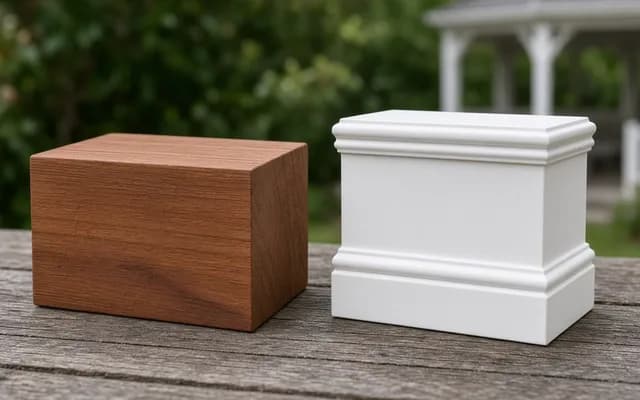 ComparisonCedar gazebo vs Vinyl gazebo
Cedar costs less up front, repairs easily and looks like a garden building, but needs finish every one to two years to reach 20 to 25 years.
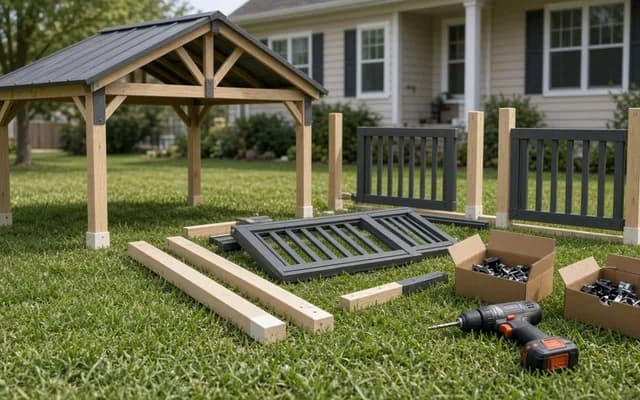 ComparisonGazebo kit with assembly vs Custom-built gazebo
A kit with professional assembly costs $3,600 to $8,600 for the product plus $500 to $1,500 to assemble and delivers a known interior at a known rating in a weekend.
 ComparisonAsphalt shingle roof vs Metal roof
Asphalt shingles cost $3 to $5 per square foot, match the house and are patched by any roofer; metal panels cost $5 to $30 per square foot, shed snow and leaves, and usually outlast the frame.
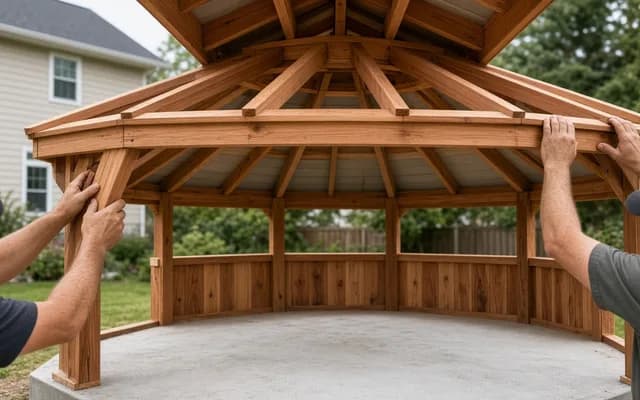 ComparisonOctagonal gazebo vs Rectangular gazebo
An octagonal gazebo costs $5,000 to $12,000 installed against $3,000 to $10,000 for a rectangle in Fixr's shape table, and its eight-sided plan seats four comfortably where a rectangle of similar footprint seats six or more.
ComparisonRestore the existing gazebo vs Replace with a new build or kitRepair when the posts are sound at grade, the frame is stiff under a push and the hub can be re-flashed, and the list is roof, screens, floor and finish.
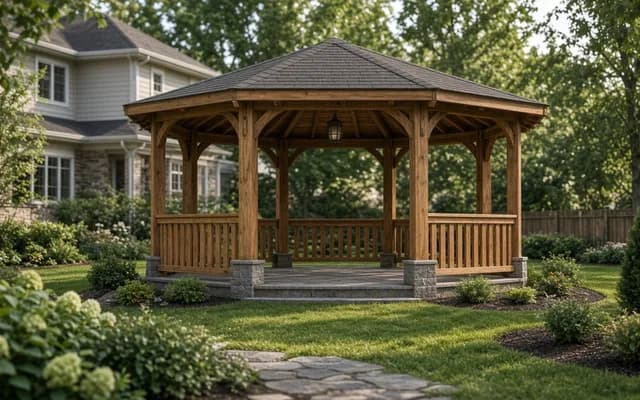 Service guideCustom Gazebo Construction
Custom gazebo construction designs the interior dimensions, roof form, supports, base, screens and lighting as one scope for a specific garden or seating layout.
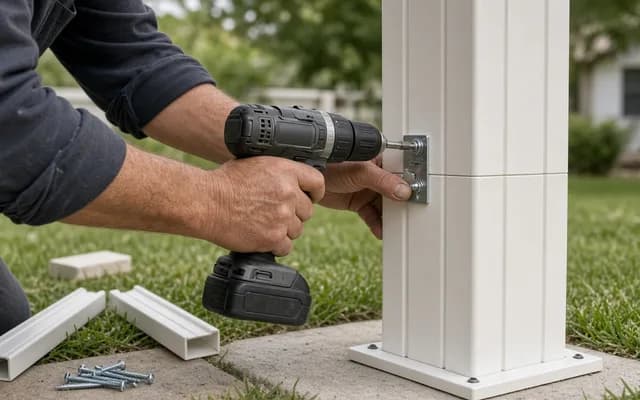 Service guideGazebo Kit Assembly
Gazebo kit assembly is the professional build of a delivered kit on a prepared base: unloading, parts inventory, anchoring, assembly, roofing and cleanup.
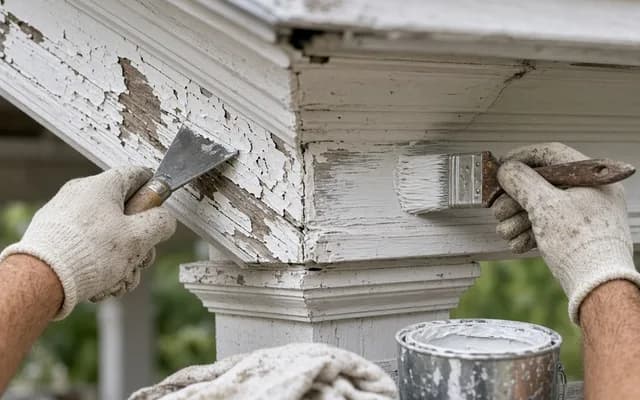 Service guideGazebo Restoration & Repair
Gazebo restoration and repair covers leaking roofs, deteriorated posts, loose connections, worn decking and tired finishes on a structure worth keeping.
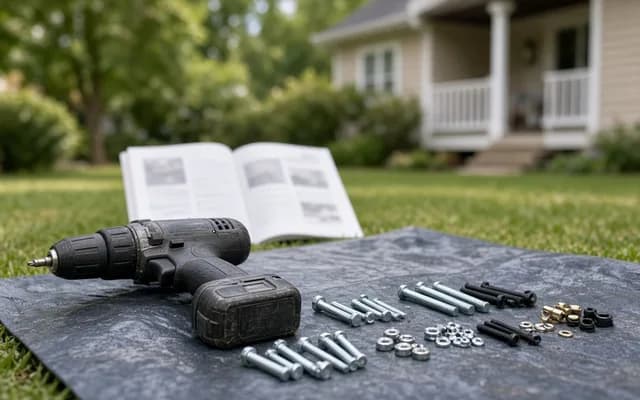 Free toolGazebo cost calculator
Size, material tier and complexity in, a realistic budget range out.
 Free toolGazebo planning quiz
10 questions that show what you already know and what to check next.
 Free toolGazebo polls
See what other planners chose and add your vote.
Tell us the size, the condition of what is there now, and what you want to change. Gazebo Guidebook passes your request to independent local professionals, who reply with written, no-obligation estimates. The service is free to use.