Kit or custom build?
No votes yet. Yours will be the first. · saved on this device
Loading...
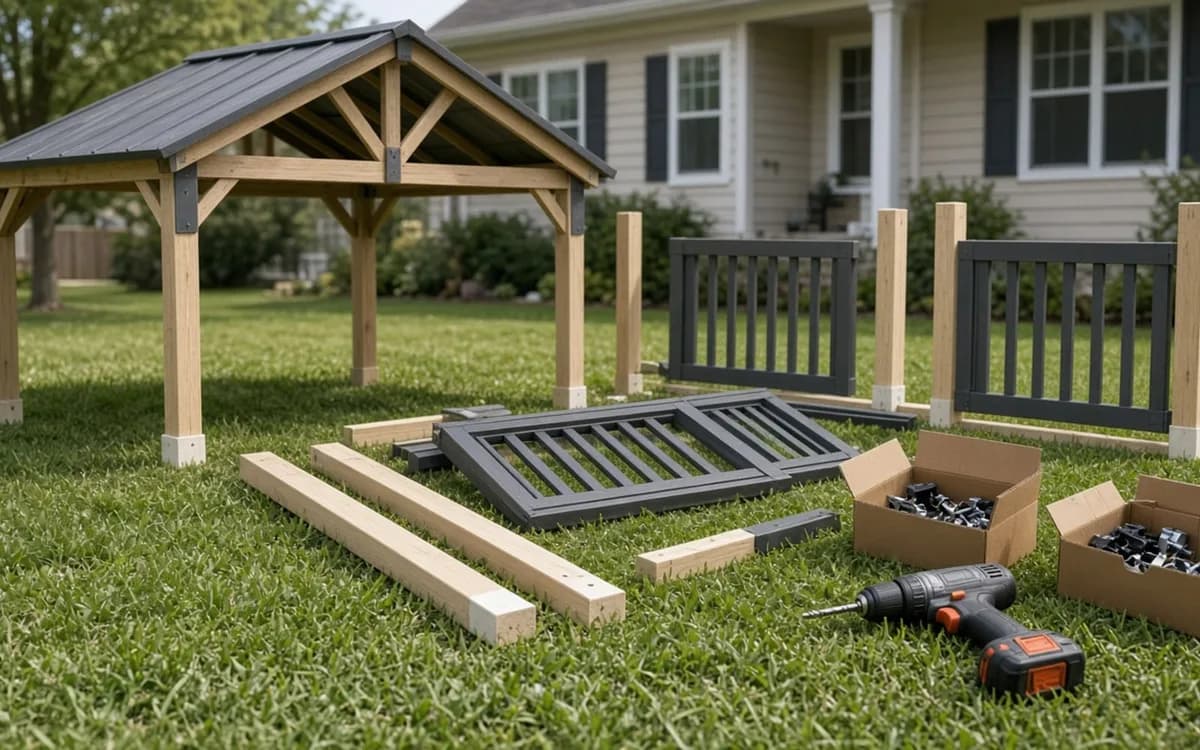
Gazebo Guidebook · Gazebo kit with assembly vs Custom-built gazebo
A kit with professional assembly costs $3,600 to $8,600 for the product plus $500 to $1,500 to assemble and delivers a known interior at a known rating in a weekend. A custom build costs $60 to $100 per square foot and delivers the interior your furniture, site and county loads require. Choose the kit when a stock interior fits; choose custom when it does not.
HomeAdvisor's 2026 guide puts the premium of a custom gazebo over a comparable kit at $5,000 to $11,000. That is the price of fit, and whether it is worth paying depends on how badly the stock box misses. This page walks through four common yards, the ten-year cost of each path, the ratings question, resale, the mistakes each path invites, and how to line up a kit proposal against a build proposal.
A kit is a known interior at a known price; custom is the interior your furniture and garden need. HomeAdvisor puts the difference at $5,000 to $11,000, which is the cost of fit.
| Factor | Gazebo kit with assembly | Custom-built gazebo |
|---|---|---|
| Upfront cost | $3,600 to $8,600 kit plus $500 to $1,500 assembly (HomeGuide; LawnLove) | $60 to $100 per sq ft installed (HomeGuide); $5,000 to $11,000 more than a comparable kit (HomeAdvisor) |
| Lifespan | Material dependent; kit hardware and base plates are the weak points | Material dependent; member sizes and footings chosen for the site |
| Maintenance | Same as material; re-tighten kit bolts yearly | Same as material |
| Appearance | Standard profiles; limited roof and trim options | Roof pitch, trim and door matched to the house |
| Climate fit | Published ratings from 22 psf and 50 mph to 36 psf and 100 mph (Wellwhisk; Backyard Oasis) | Engineered to the county's loads |
| Install time | 6 to 12 week lead time on some cedar models (Yardistry); 10 to 20 hours to a weekend on site | Several weeks including footings and any permit |
| Resale and ROI | Same patio benchmark; less distinctive | Better fit photographs and appraises better |
| Best for | Standard 8-by-8 to 12-by-12 needs on a good base | Odd footprints, slopes, decks, screened rooms, heavy loads |
The kit wins when a stock interior fits the taped-out furniture, the published snow and wind ratings suit your county, and the base is sorted. MarketIntelo finds small footprints are 42.1% of volume for a reason: for most 10-by-10 needs the kit is the honest answer.
Custom wins when no interior fits, when the site slopes or sits on a deck, when you want an enclosed room, or when the county's loads exceed what kits publish. The custom page explains what the premium buys; the assembly page explains what a kit proposal must include.
Yard one: a level lawn or sound slab, a 60-inch round table for six, no screens, a mild county. A 12-by-12 hardtop or cedar kit fits, and MarketIntelo's finding that 42.1% of units are small footprints suggests most buyers are in this yard. Yard two: the same furniture but a 72-inch rectangular table with six chairs and a wish for screens with a door. The door bay and the long table push the interior past most kits; a custom 12-by-14 rectangle with a wider door bay is the honest answer.
Yard three: a slope, or a deck the gazebo must sit on. Kits assume a flat base at one level; stepped footings or posts through deck framing are custom work. Yard four: a county with a ground snow load or design wind speed above what the kit publishes. No assembler can raise a kit's rating, so the custom page is where that yard goes regardless of budget.
Year one: HomeGuide's $3,600 to $8,600 vs $60 to $100/sq ft covers both paths, with LawnLove's $500 to $1,500 for assembly and a base if needed on the kit side, a slab at Angi's $4 to $8/sq ft, and a permit of up to $150 to about $450 on the custom side, per HomeAdvisor and Fixr. For a 10-by-12, that is roughly $5,000 to $11,000 for the kit path and $7,200 to $12,000 for the build, before shape and enclosure premiums.
Years two to ten: the same finish schedule if both are wood, the same re-roof if both have shingles. Kits add an annual bolt re-tightening and the risk of discontinued parts; custom adds nothing a kit does not. The main ten-year difference is that a kit that never quite fit gets used less, and an unused structure is the most expensive kind. Use the calculator's kit and built tiers with your actual footprint to see the gap for your project.
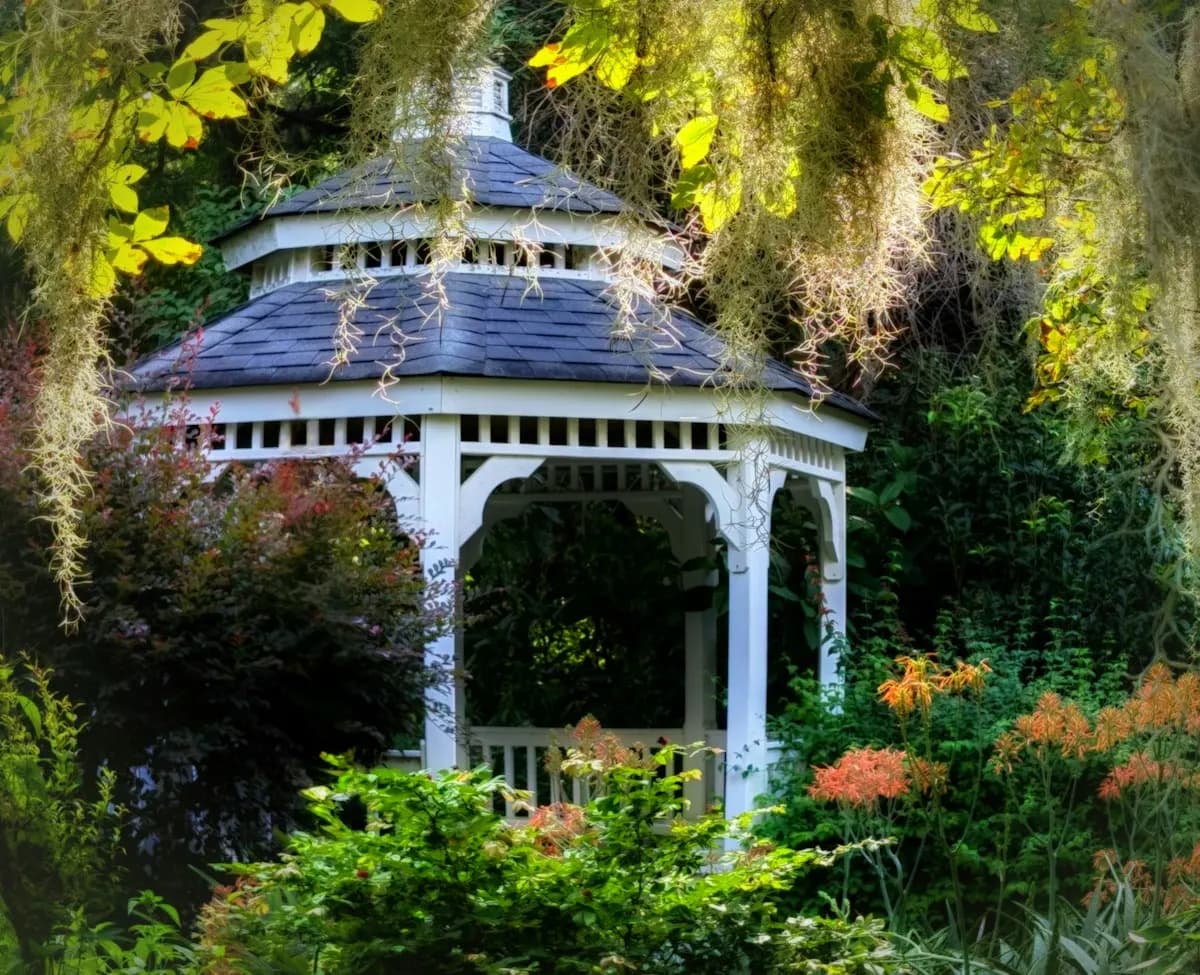
Kits publish what they are rated for. Wellwhisk reports the Backyard Discovery Norwood at 100 mph wind with a 9,000 pound snow rating; SUNJOY describes box-store metal gazebos in tiers of 50 / 70 / 100 mph; Backyard Oasis lists the Yardistry Meridian at 36 psf / 65 mph. Compare those with your county's ground snow load in pounds per square foot and its design wind speed. A 22 psf kit under a 40 psf sky is a collapse waiting for a wet March.
Custom builds are sized to the county, and in coastal or mountain counties that is the reason they exist. In the Southeast and Gulf, wind governs and anchoring is the detail; in the Northeast, Midwest and mountain West, snow governs and rafter size and pitch are the details. The regional page gives typical figures; the building department gives the exact ones.
There is no gazebo-specific resale study. The National Association of Realtors' 2023 report found a new patio recovered 95% and a landscape upgrade 100% of cost, and those are the nearest benchmarks for either path. Houzz's 2026 Outdoor Trends Study found 28% of outdoor renovators wanted the project to match the home's style, and a custom gazebo that matches the house's roof pitch and trim photographs as part of the house; a kit photographs as a product. Appraisers rarely distinguish, buyers sometimes do.
Condition matters more than origin. A well-anchored, well-kept kit on a slab is an asset; a custom cedar structure with grey posts and a leaking hub is a liability. If the plan is to sell within five years, the kit path recovers a larger share of a smaller outlay. If the plan is to stay, the custom path buys years of use from a structure that fits.
Kit path: ordering before the base is ready, so the assembler charges a return visit; ordering before the rating is checked; discovering the interior is two feet smaller than the roof dimension on the box; letting the freight driver leave before the boxes are checked; assembling on pavers with no anchors; and buying a fabric top expecting a roof, which Modern Shade gives 2 to 5 years. Every one of these is a planning error rather than an assembly error.
Custom path: paying for drawings before checking the permit threshold and HOA rules; accepting a per-square-foot price without the interior dimension written down; letting the shape drift to an octagon that seats four; skipping the standoff bases and hub detail; and starting in spring in a region where the permit queue is eight weeks. The planning article is the antidote to both lists.
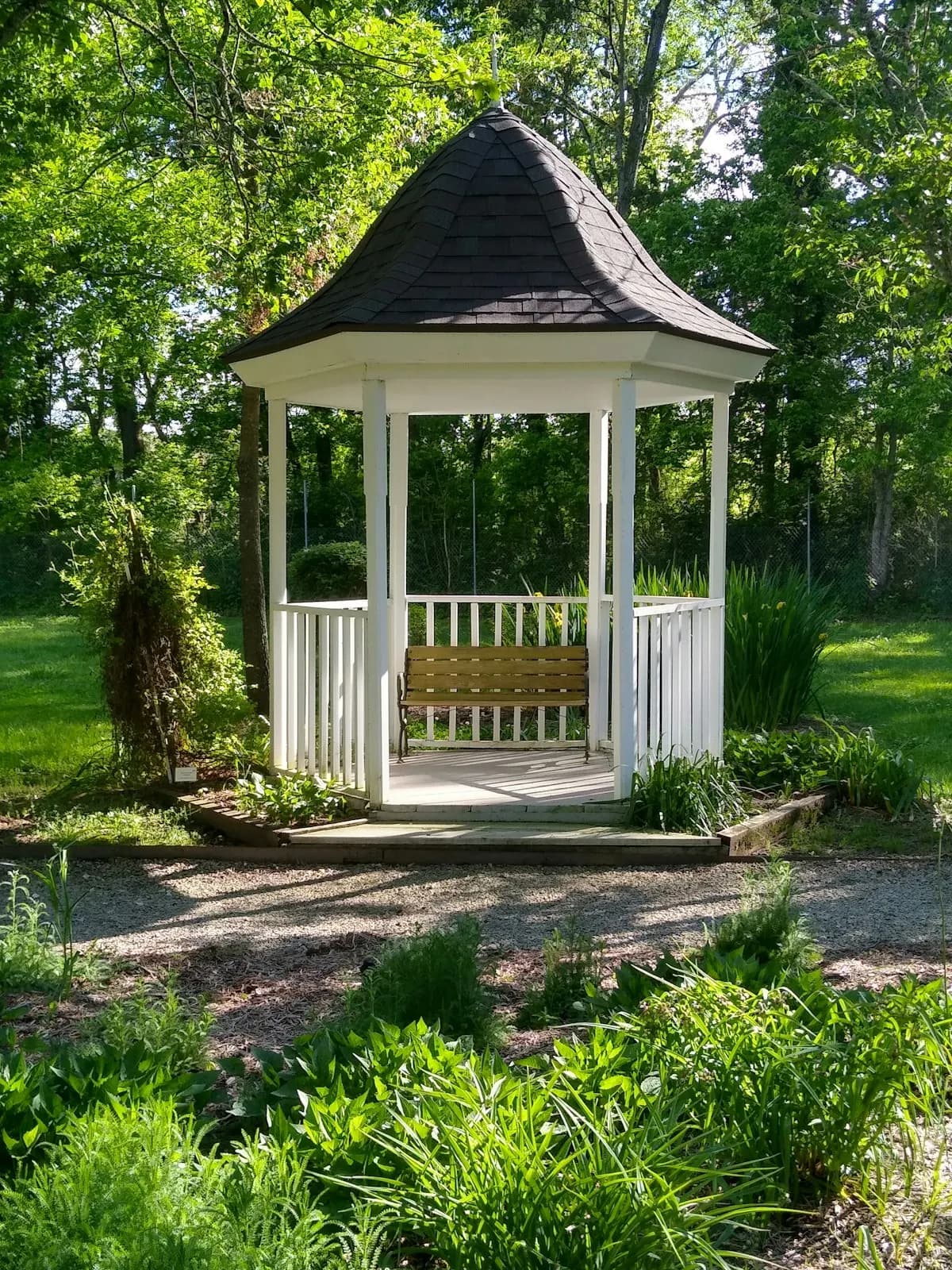
Make the kit bid complete first: kit price, freight, unloading, base, anchors, assembly, roofing panels, screens, packaging removal, finish on raw wood, electrical, permit if any, and the return-visit trigger. Now it is a total. Make the build bid explicit: interior between posts, shape, roofing, base detail, post bases, floor, screens, electrical, permit and drawings, finish, schedule. Now they are the same structure and the difference is the fit premium HomeAdvisor describes.
Then ask two questions of each. For the kit: what is the published rating and what will you anchor into? For the build: what is the labour line, and how does it compare with Fixr's roughly $7,000 on a 9-foot build? A kit bid without a rating and a build bid without a labour line are both incomplete. The kit assembly page and the estimate request list the items to ask for.
Homeowner polls
No votes yet. Yours will be the first. · saved on this device
No votes yet. Yours will be the first. · saved on this device
No votes yet. Yours will be the first. · saved on this device
Rarely by more than a few inches. Cedar kits can be trimmed but not lengthened; steel and aluminum kits cannot be resized. If the interior misses your furniture rectangle by more than a foot, the kit is the wrong product and modifying it will cost more than it saves.
Neither, strictly. HomeGuide prices pre-built delivered-and-installed units at $5,000 to $14,500. They are factory-built to standard sizes, often Amish-made in wood or vinyl, and set on your base by crane or trailer. They avoid assembly but need access and a base sized to the unit.
Often. Many carpenters and deck builders assemble kits between larger jobs and will quote both paths from one brief. That is useful, because the same person pricing both removes the incentive to steer you. Ask for the kit path as a base bid and the custom build as an alternate, with the interior dimension fixed, so the difference is visible as a single number.
Between the two. HomeGuide lists pre-built units delivered and installed at $5,000 to $14,500, above most kits and below most custom work of the same size. They are built to stock designs, so fit is the kit question, but with heavier members and higher ratings; Backyard Oasis notes Amish units at 110 mph. Access decides whether one can be delivered; a crane lift adds to the price.
A kit is governed by lead time and the base: Yardistry lists 6 to 12 weeks for assembly service on its cedar model, a slab needs a week to cure, and assembly takes 10 to 20 hours for a hardtop per Wellwhisk. A custom build is governed by permit review and the crew's schedule: several weeks of review where required, then two to three weeks on site. Both land in the same season if started in winter.
Sometimes. A builder may frame a custom floor and posts and top it with a manufactured roof system or use a prefab screen kit, which Inch Calculator prices at $500 to $800. Hybrids work when the manufactured part is a standard size and the custom part is what did not fit. Ask the builder to name any manufactured components so warranties and parts availability are clear.
If the rating meets or exceeds the county's ground snow load, it is anchored as specified, and the roof is kept from drifting to more than the rating assumes, yes. Ratings assume even loading; a lean-to drift against a fence or house can exceed them. A structure sited away from drift lines, or a custom design with margin, is the safer choice where snow is heavy.
Return it if the retailer allows, before assembly and ideally before the boxes are opened, and re-plan; a restocking fee is cheaper than a gazebo you do not use. If it cannot be returned, the options are a smaller table or accepting a retreat rather than a dining room. This is the reason the planning article insists on taping the interior between post faces before ordering.
No. An assembler warrants the assembly, usually for a short period, while the manufacturer warrants the product. A builder warrants the structure as a whole, commonly for a year on workmanship with materials covered by their suppliers. Ask each for the warranty in writing and for what triggers a paid return visit. A build with a single responsible party is simpler when something fails.
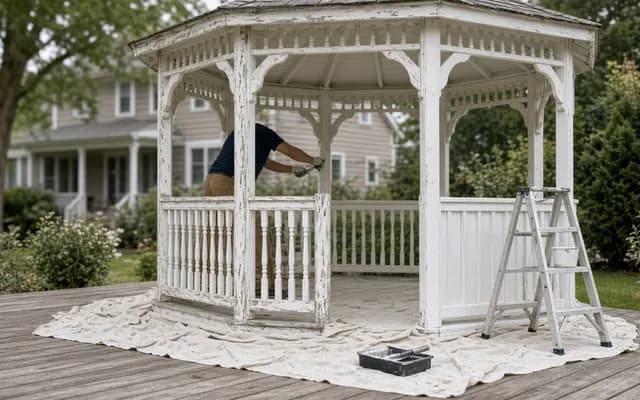
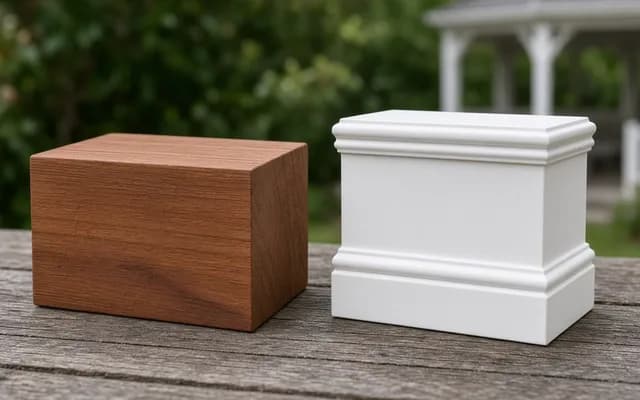 ComparisonCedar gazebo vs Vinyl gazebo
Cedar costs less up front, repairs easily and looks like a garden building, but needs finish every one to two years to reach 20 to 25 years.
 ComparisonAsphalt shingle roof vs Metal roof
Asphalt shingles cost $3 to $5 per square foot, match the house and are patched by any roofer; metal panels cost $5 to $30 per square foot, shed snow and leaves, and usually outlast the frame.
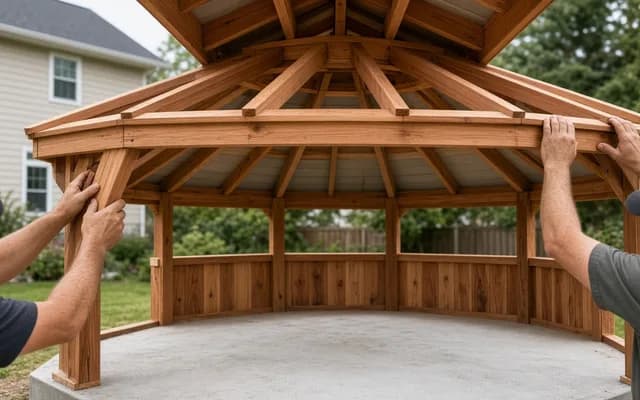 ComparisonOctagonal gazebo vs Rectangular gazebo
An octagonal gazebo costs $5,000 to $12,000 installed against $3,000 to $10,000 for a rectangle in Fixr's shape table, and its eight-sided plan seats four comfortably where a rectangle of similar footprint seats six or more.
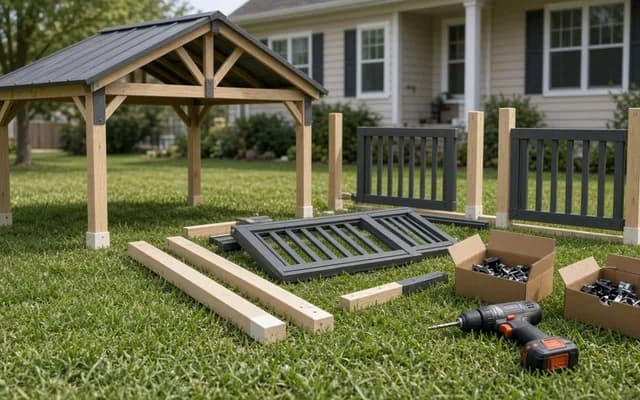 ComparisonRestore the existing gazebo vs Replace with a new build or kit
Repair when the posts are sound at grade, the frame is stiff under a push and the hub can be re-flashed, and the list is roof, screens, floor and finish.
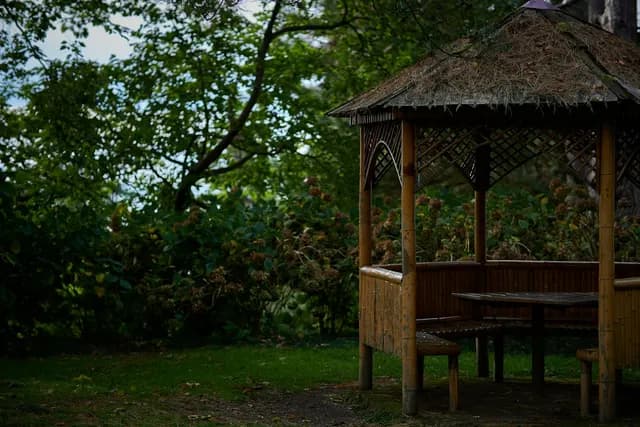 ComparisonGazebo vs Pergola
A gazebo has a solid roof, keeps off rain and costs about $7,590 on average installed per LawnLove, with most paying $5,365 to $9,025.
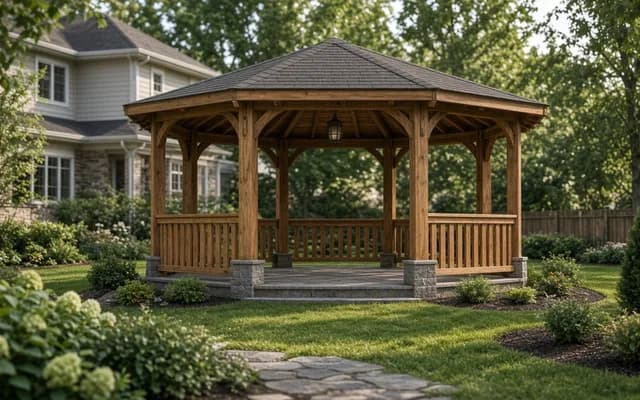 Service guideCustom Gazebo Construction
Custom gazebo construction designs the interior dimensions, roof form, supports, base, screens and lighting as one scope for a specific garden or seating layout.
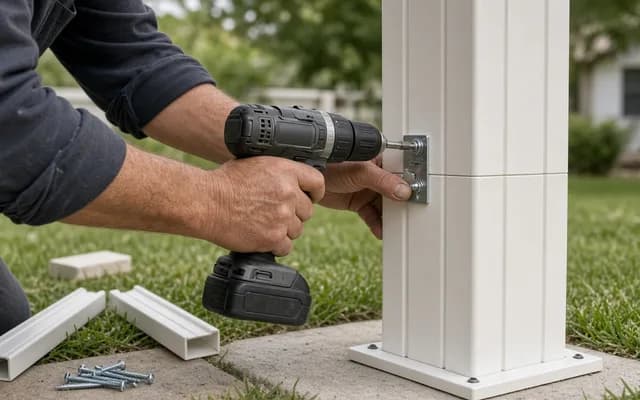 Service guideGazebo Kit Assembly
Gazebo kit assembly is the professional build of a delivered kit on a prepared base: unloading, parts inventory, anchoring, assembly, roofing and cleanup.
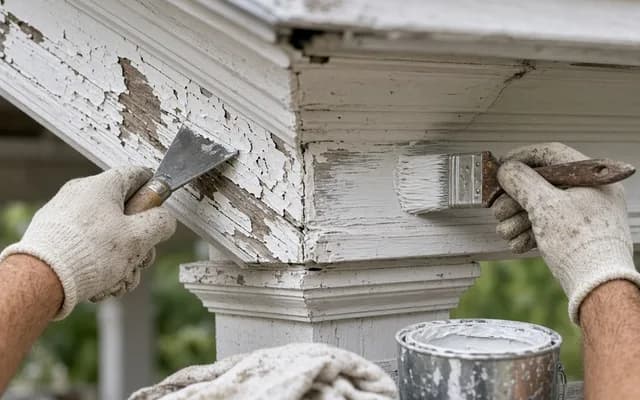 Service guideGazebo Restoration & Repair
Gazebo restoration and repair covers leaking roofs, deteriorated posts, loose connections, worn decking and tired finishes on a structure worth keeping.
 Free toolGazebo cost calculator
Size, material tier and complexity in, a realistic budget range out.
 Free toolGazebo planning quiz
10 questions that show what you already know and what to check next.
 Free toolGazebo polls
See what other planners chose and add your vote.
Tell us the size, the condition of what is there now, and what you want to change. Gazebo Guidebook passes your request to independent local professionals, who reply with written, no-obligation estimates. The service is free to use.