Which shape are you leaning toward?
No votes yet. Yours will be the first. · saved on this device
Loading...
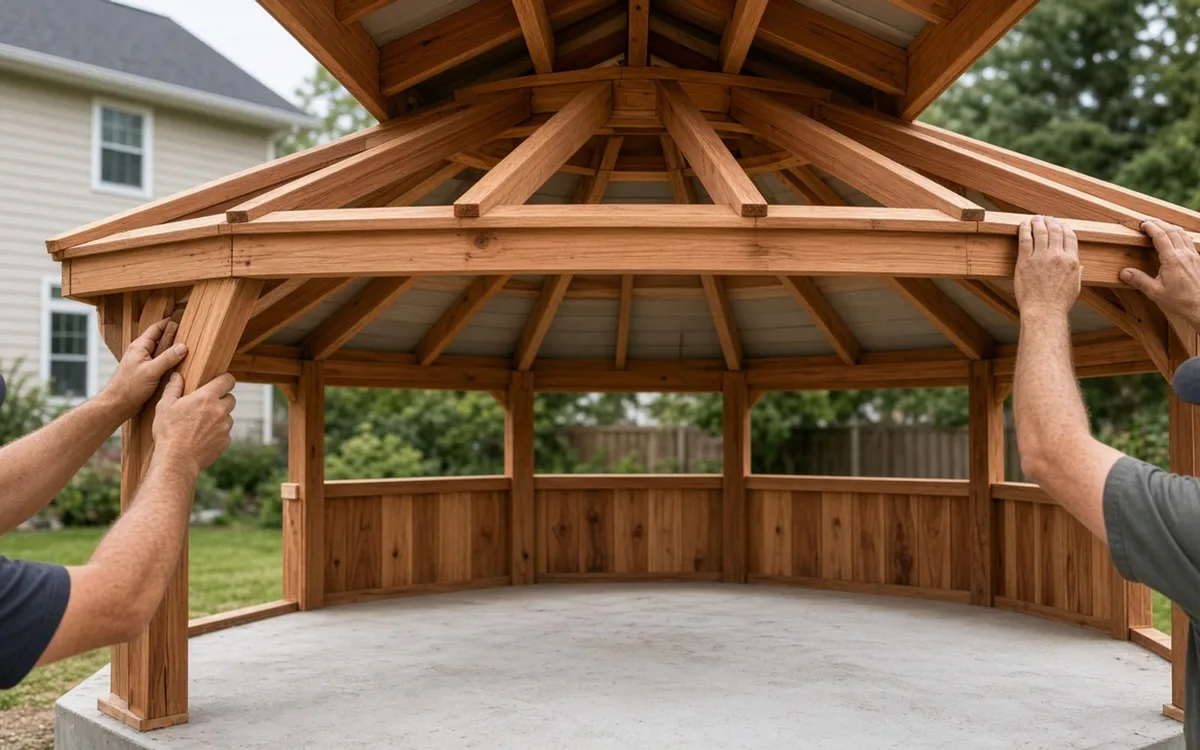
Gazebo Guidebook · Octagonal gazebo vs Rectangular gazebo
An octagonal gazebo costs $5,000 to $12,000 installed against $3,000 to $10,000 for a rectangle in Fixr's shape table, and its eight-sided plan seats four comfortably where a rectangle of similar footprint seats six or more. Choose the octagon for a garden focal point with a view all round; choose the rectangle for dining, screening with a door, and budget.
The octagon is what most people picture when they hear the word gazebo, and it is the shape that costs the most per usable square foot. Fixr lists octagonal designs at $5,000 to $12,000 and rectangular at $3,000 to $10,000, and the difference is eight posts, eight hips and a hub against four to six posts and a simple roof. This page works through what that premium buys and when it is worth it.
The octagon is the classic garden gazebo and costs more per usable foot; the rectangle seats more people for the money and screens more easily.
| Factor | Octagonal gazebo | Rectangular gazebo |
|---|---|---|
| Upfront cost | $5,000 to $12,000 installed (Fixr) | $3,000 to $10,000 installed (Fixr) |
| Lifespan | Same as material; more roof joints to flash | Same as material; simpler roof |
| Maintenance | Hub and eight hips to inspect | Fewer roof joints |
| Appearance | Traditional, focal point in a garden | Reads as a pavilion; matches most houses |
| Climate fit | Steep hip roof sheds snow well | Depends on pitch; low-slope versions hold snow |
| Install time | Longer; more cuts and eight posts | Shorter; four to six posts |
| Resale and ROI | Distinctive; photographs well | Practical; valued as covered dining |
| Best for | A garden retreat for four, a view in every direction | Dining for six or more, screened rooms, tight budgets |
The octagon wins when the gazebo is a destination in the garden rather than a dining room, when four seats are enough, and when the extra roof joints are worth the look. Its steep roof handles snow well.
The rectangle wins for seating six or more, for screened dining rooms where a door takes a whole panel, and for budgets. Fixr prices octagons at $5,000 to $12,000 against $3,000 to $10,000 for rectangles. Tape out the furniture before choosing; the quiz asks exactly that.
A 12-foot octagon, measured across the flats, has about 119 square feet of floor but a usable rectangle inside the railings closer to 9 by 9. A 48-inch round table with four chairs fits; a 60-inch round with six does not once the chairs are pushed back against angled railings. A 10-by-12 rectangle has 120 square feet, nearly the same area, and seats six at a 72-inch table with room to pass on one side, because every foot of a rectangle is usable.
That is the arithmetic behind the planning quiz's question about the taped-out layout. If the use is dining for six, the rectangle wins on floor alone; if the use is two chairs, a small table and a view in every direction, the octagon's angles are a feature rather than lost space. Houzz found 53% of renovated outdoor spaces include a quiet retreat, and the octagon is a retreat shape.
Up front, Fixr's shape premium runs a few thousand dollars for the octagon at the same footprint. Roofing costs more too: an octagon's roof has eight hips to cap and a hub to flash, so the labour share of Angi's $3 to $5/sq ft for shingles or $5 to $30/sq ft for metal runs higher per square foot, and metal panels waste more in the triangular cuts. Screens cost more on an octagon because the kit must match the bay width exactly and the door takes a full bay.
Over ten years the maintenance difference is the roof joints. Eight hips and a hub are eight places for a cap to lift and one place for water to find the rafter tops; a rectangular hip or gable roof has two to four hips or a ridge. The finish schedule on wood is the same per square foot of surface, but an octagon has more edge and trim per square foot of floor. The calculator's premium tier includes the octagon; run both shapes for your footprint.

The octagon's steep hip roof sheds snow well in every direction and its compact plan resists wind uplift evenly, which is why it appears in the Northeast and Midwest with such consistency. A rectangle's performance depends on its pitch: a steep gable sheds as well as an octagon, while the low-slope roofs on many hardtop kits hold snow and must be rated for it. Wellwhisk reports the Backyard Discovery Norwood, a rectangular kit, at 100 mph wind with a 9,000 pound snow rating, which shows a rectangle can be rated highly when designed for it.
In hot climates the octagon's cupola gives a natural vent at the peak and its all-round openness catches breezes; a rectangle with a solid gable end can trap heat unless vented. In wet climates the rectangle's fewer roof joints leak less. The regional page lists the loads that decide the pitch either shape needs.
The rectangle. Screen panels are rectangular, doors are rectangular, and a rectangle's bays can be spaced so one is a door width and the rest are equal. Inch Calculator prices a prefab screen kit at $500 to $800 and those kits are model-specific; on a custom octagon the screens are custom too. Lighting is similar: a rectangle's ceiling takes a fan and two fixtures on a beam line, while an octagon's hub takes one central fixture and the fan competes with the cupola.
If a screened dining room is the goal, the rectangle is close to the only sensible answer, and Fixr's $10,000 to $15,000 for walled designs assumes it. If the goal is an open retreat with a pendant light under a cupola, the octagon is the right shape and screening it later is possible with custom panels at higher cost.
The octagon photographs as a garden feature and shows up in listing photos; the rectangle photographs as covered dining and shows up in the description. The National Association of Realtors' 2023 report found 97% of Realtors say curb appeal matters in attracting a buyer, and a well-placed octagon visible from the street is curb appeal in a way a rectangular pavilion behind the house is not. Neither has its own recovery figure.
Octagon mistakes: buying it for a dining table that will not fit, placing it where the all-round view is a fence, and skimping on the hub. Rectangle mistakes: choosing a low-slope roof in snow country, spacing the bays before deciding where the door goes, and making it so long it reads as a carport. The planning article covers the taped layout that prevents the first mistake on either list.
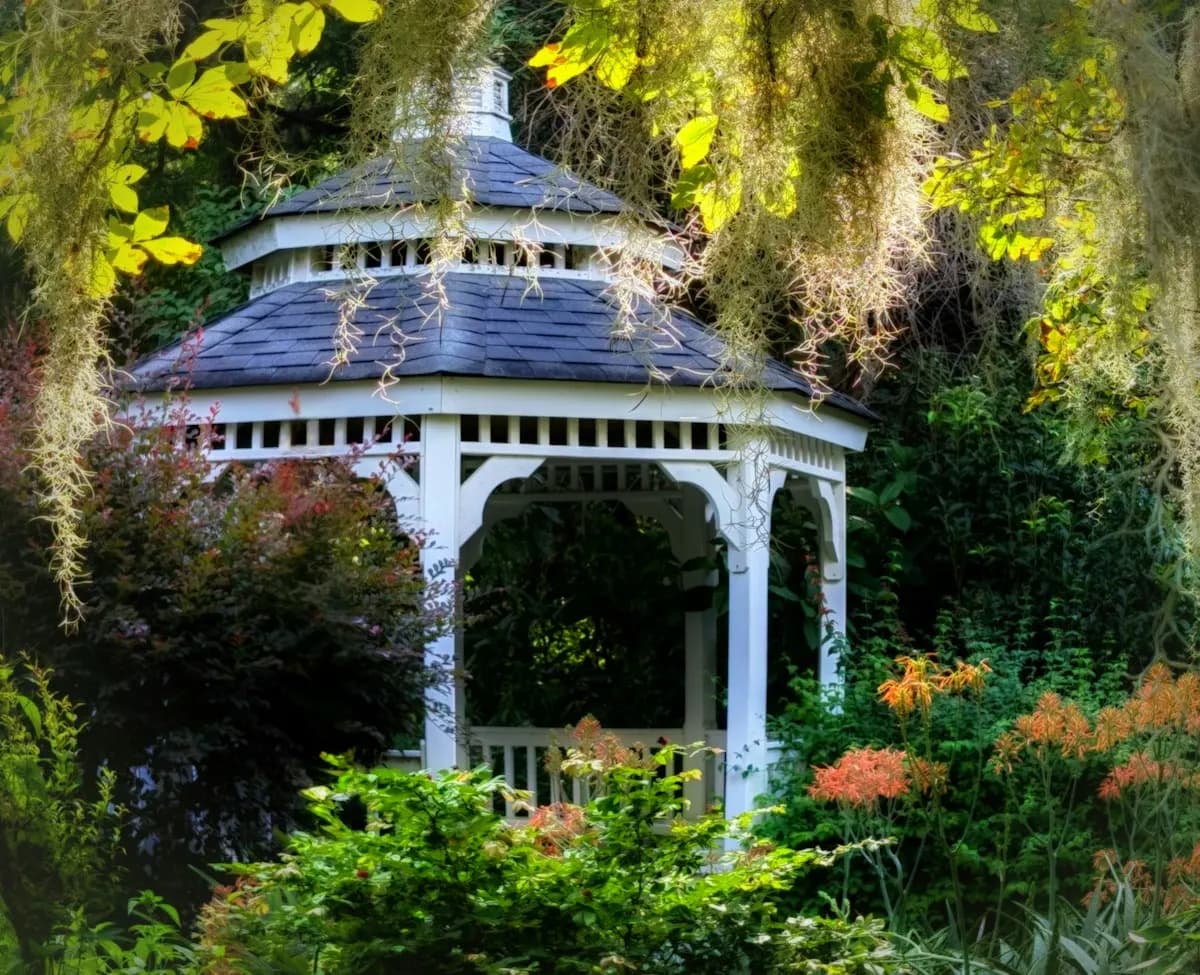
Ask each pro for both shapes at the same usable interior rather than the same nominal size. A 12-foot octagon and a 10-by-12 rectangle are the honest pair; a 12-foot octagon and a 12-by-12 rectangle are not, because the rectangle has 25 more square feet of usable floor. Then compare the roofing line, the screen line if any, and the base line, which will differ because the octagon needs eight footings and the rectangle four to six.
Check the octagon bid's roofing against the roof area and Angi's per-foot ranges with an allowance for the extra cuts, and check that a hub or cupola detail is named. Check the rectangle bid's pitch against the county's snow load. Send the same brief to several pros through the estimate request and ask for both as alternates; the custom construction page lists the other proposal items.
Homeowner polls
No votes yet. Yours will be the first. · saved on this device
No votes yet. Yours will be the first. · saved on this device
No votes yet. Yours will be the first. · saved on this device
About 119 square feet of floor, but the largest rectangle between opposite post faces is roughly 9 by 9 feet once railings are in. That is a table for four with chairs pulled out. A 12-by-12 square gives 144 square feet and a full 11-by-11 rectangle between posts.
In price, yes: Fixr lists hexagonal at $5,000 to $11,000. In usable floor, a hexagon is closer to a rectangle than an octagon for the same footprint and has two fewer roof hips to flash. It is a reasonable compromise for a five- or six-seat retreat.
It is closer to a rectangle in cost and to an octagon in look. A square hip roof has four hips and a hub, so it keeps the cupola and the all-round view with half the roof joints and half the posts of an octagon. Fixr's shape table does not break squares out, but they price near the rectangular range. For a retreat with a pendant light on a budget, a square is often the right compromise.
Match a standard screen panel or door: bays of 36 to 48 inches suit prefab panels, and one bay of at least 36 inches clear is needed for a hinged door. If the bays are spaced for looks first and screens second, custom panels cost more and the door may land in the wrong place. Decide screens before the post layout, even if they are installed later.
Yes, at 14 feet across the flats or more, which gives roughly an 11-foot usable square. Fixr's octagonal range runs to $12,000 installed for that reason, and a 14-foot octagon has about 162 square feet of floor and a roof that clears fewer permit thresholds. A 12-by-14 rectangle seats the same six for less. Choose the large octagon if the shape is the point.
Neither is easier; both need stepped footings or a level platform. A rectangle with its long axis along the contour needs fewer steps in the footings than one across it, and its four to six posts are fewer holes than an octagon's eight. On a steep site, a rectangular deck platform with the gazebo on it is the usual approach, and it changes the scope to custom work.
Slightly. Fixr lists hexagonal designs at $5,000 to $11,000 against $5,000 to $12,000 for octagons, reflecting six posts and six hips instead of eight. The usable interior is similar for the same across-flats dimension, and the look is close. If an octagon is over budget by a little, a hexagon is worth pricing; if it is over by a lot, the rectangle is the answer.
Rectangles and squares dominate the kit market because they pack flat and assemble fast; Wellwhisk's and SUNJOY's kit references are all rectangular hardtops. Octagonal kits exist in cedar and vinyl from Amish and specialty makers and are often delivered as pre-built units rather than boxed kits. If an octagon is the goal, expect a longer lead time and a delivery-access question.
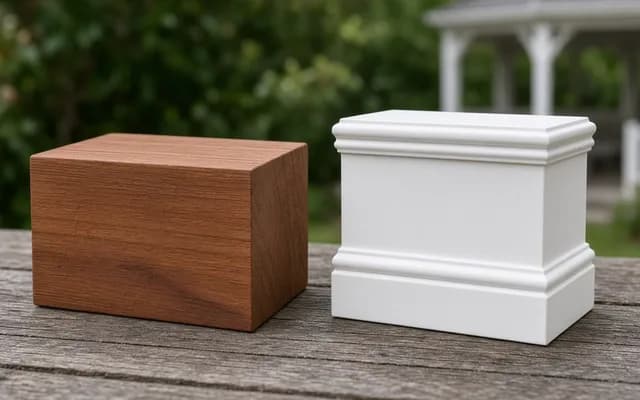 ComparisonCedar gazebo vs Vinyl gazebo
Cedar costs less up front, repairs easily and looks like a garden building, but needs finish every one to two years to reach 20 to 25 years.
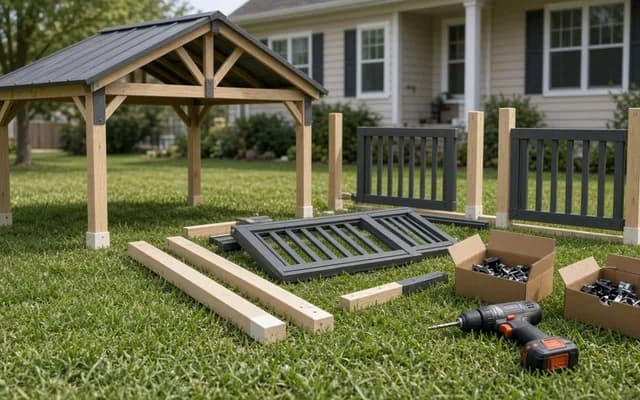 ComparisonGazebo kit with assembly vs Custom-built gazebo
A kit with professional assembly costs $3,600 to $8,600 for the product plus $500 to $1,500 to assemble and delivers a known interior at a known rating in a weekend.
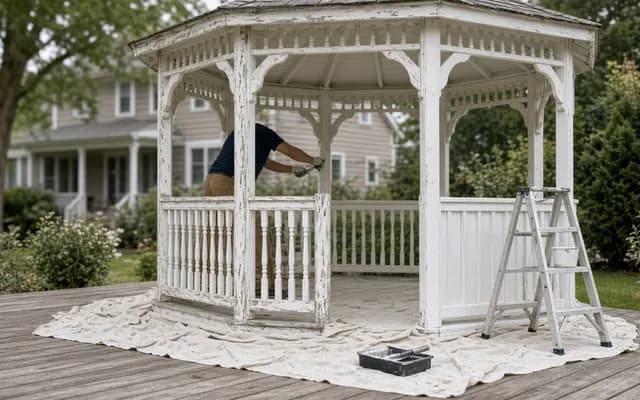 ComparisonAsphalt shingle roof vs Metal roof
Asphalt shingles cost $3 to $5 per square foot, match the house and are patched by any roofer; metal panels cost $5 to $30 per square foot, shed snow and leaves, and usually outlast the frame.
ComparisonRestore the existing gazebo vs Replace with a new build or kitRepair when the posts are sound at grade, the frame is stiff under a push and the hub can be re-flashed, and the list is roof, screens, floor and finish.
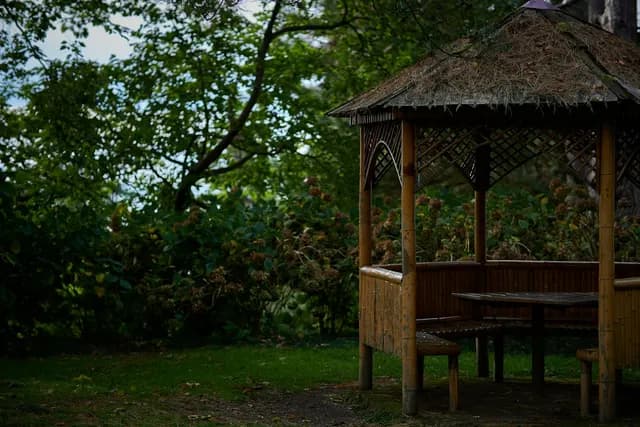 ComparisonGazebo vs Pergola
A gazebo has a solid roof, keeps off rain and costs about $7,590 on average installed per LawnLove, with most paying $5,365 to $9,025.
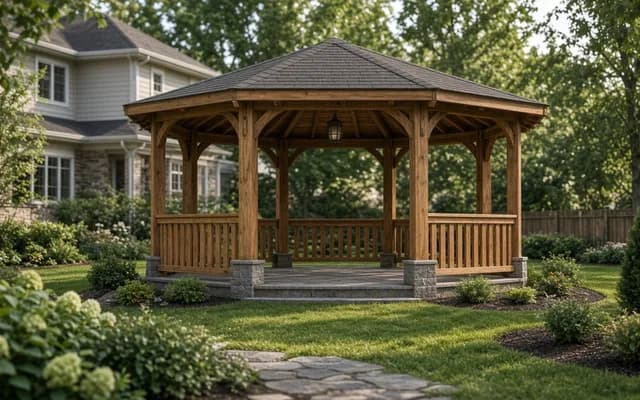 Service guideCustom Gazebo Construction
Custom gazebo construction designs the interior dimensions, roof form, supports, base, screens and lighting as one scope for a specific garden or seating layout.
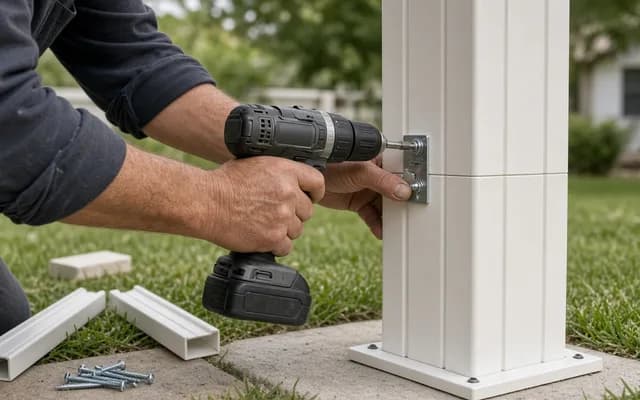 Service guideGazebo Kit Assembly
Gazebo kit assembly is the professional build of a delivered kit on a prepared base: unloading, parts inventory, anchoring, assembly, roofing and cleanup.
 Service guideGazebo Restoration & Repair
Gazebo restoration and repair covers leaking roofs, deteriorated posts, loose connections, worn decking and tired finishes on a structure worth keeping.
 Free toolGazebo cost calculator
Size, material tier and complexity in, a realistic budget range out.
 Free toolGazebo planning quiz
10 questions that show what you already know and what to check next.
 Free toolGazebo polls
See what other planners chose and add your vote.
Tell us the size, the condition of what is there now, and what you want to change. Gazebo Guidebook passes your request to independent local professionals, who reply with written, no-obligation estimates. The service is free to use.